
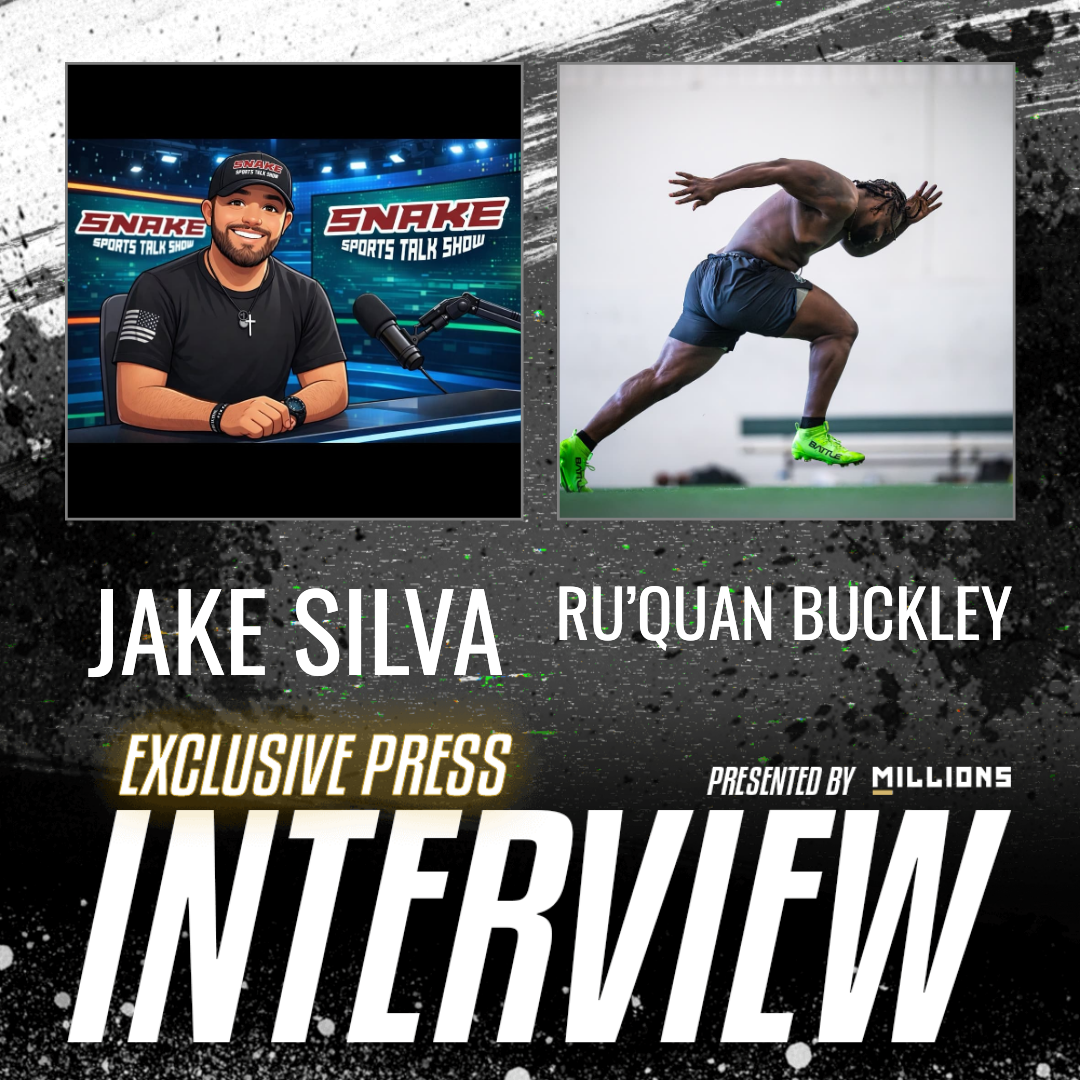
Ru’Quan Buckley Jake Silva interview on a 24-team playoff

Key takeaways
- Ru’Quan Buckley said a 24-team college football playoff would be too demanding for players, especially where recovery resources are limited.
- Buckley said a longer season would require more recovery time, more breaks and fewer padded practices.
- Buckley warned that injuries and added physical strain could lead some college players to consider early retirement.
- Buckley said Nebraska had improved its defense, quarterback play, offense and discipline, while Michigan State needed better discipline and recovery.
- Buckley said defensive tackles must hold their gaps so linebackers can make the intended read.
The Ru’Quan Buckley Jake Silva interview centered on a proposed 24-team college football playoff: the former Nebraska and Michigan State defensive tackle said more games would be too demanding for players, especially at schools with fewer recovery resources. He also assessed both of his former programs and explained why a defensive tackle who abandons his gap can leave a linebacker with a difficult decision.
What did Ru’Quan Buckley say about a 24-team college football playoff?
Ru’Quan Buckley believes a 24-team college football playoff would ask too much of players because programs do not all have the equipment and recovery resources to support a longer season. He said teams would need to give players more rest and reduce padded practices to help them handle the added physical demands.
Recovery during a longer postseason
Buckley said the concern applies to small and large programs alike, though schools with fewer resources would face a particular challenge. To keep players performing at their best, he argued, a program needs the right equipment, coaching and recovery support. He contrasted that uneven college landscape with the resources available to NFL players.
When Silva asked what a longer bracket would mean for training, Buckley pointed to changes during the regular season, not just the postseason. He said teams would have to build in more recovery and more breaks rather than continuing the same physical practice routine while adding games.
Buckley put his clearest warning about that workload plainly:
Your players can't go for pads every single day no more.
Injuries, draft decisions and early retirement
Silva raised the dilemma for a junior or senior with NFL draft prospects who wants to play but also has to consider the effect of an injury. Buckley agreed that injury risk would be a major factor in a larger bracket. He said players would need time to recover and could spend more practice time learning on the field instead of working in pads.
He also warned that the cumulative strain could force some juniors and seniors to decide whether to stop playing earlier than planned. In Buckley’s view, money available through NIL could become part of that decision for players weighing what continued football would cost their bodies. He presented early retirement as a possibility, not as an inevitable result of expansion.
What did Ru’Quan Buckley say about this season and Nebraska?
Ru’Quan Buckley said the college football season looked unusually competitive, making it difficult to judge teams early. Looking specifically at Nebraska, where he said he graduated, he saw improvement in the defense, quarterback play, offense and discipline compared with the teams he played on.
Competition across college football
Buckley said many programs looked hungry for a championship, rather than there being an obvious separation between good and bad teams. He brought up Notre Dame as a team he felt had not received the chance to prove itself in the playoff. His broader point was that teams were competing hard enough to make early judgments difficult.
Nebraska’s defense and discipline
Silva asked Buckley about Nebraska after describing why he thought the team deserved more attention. Buckley agreed with the favorable assessment but grounded his answer in what he had seen change: a better defense, a quarterback leading the program well, a stronger offensive group and fewer discipline problems.
During his time at Nebraska, Buckley recalled close losses and a subsequent emphasis on avoiding that pattern. Penalties were a particular problem, he said. That experience shaped why improved discipline stood out to him as much as the current team’s play on either side of the ball.
What did Ru’Quan Buckley say Michigan State is missing?
Ru’Quan Buckley said Michigan State needed better discipline and better player recovery. After watching the team face Notre Dame, he thought Michigan State had played well enough to win, but he was concerned that injuries and limited recovery options were affecting the program early in the season.
Buckley praised Michigan State’s performance against Notre Dame. His concerns were about what it would take to sustain that level of play: he identified discipline first, then recovery, when Silva asked what the team was missing.
In Buckley’s view, giving players too little recovery time increases the chance of injury. He estimated that Michigan State had about ten players out with major injuries at the time and questioned whether the staff was doing enough to address the situation. That number was his estimate, not a confirmed injury count.
His Michigan State assessment echoed his playoff concerns. In both cases, Buckley treated recovery as part of a program’s ability to compete, not simply something players do after a game. A team can play well in one matchup, he argued, while still needing to address the physical demands placed on its roster.
How does Ru’Quan Buckley explain defensive tackle technique?
Ru’Quan Buckley said defensive tackles must enjoy playing, stop the run and then be able to stop the pass. Against the run, he emphasized hands and technique against double teams. Above all, he said a tackle must stay responsible for his gap so a linebacker can make the intended read.
Using hands and holding the assigned gap
Buckley said a tackle who does not use his hands properly, or has not learned to fight a double team, will struggle to stop the run. Feet and hips matter too, but he focused on what happens when a play stops going the tackle’s way. Making a late move into another gap can disrupt the defense even if the tackle is trying to recover.
He described a play designed for both a tackle and a linebacker to contribute. If the tackle suddenly leaves his assigned gap, the linebacker has to make a quick new decision. Buckley said that confusion can affect the wider group of linebackers, tackles and defensive ends. His instruction was to keep working within the assignment rather than spin out of the gap.
Changing from run defense to pass rush
Buckley also wants tackles to react when an apparent run becomes a pass. He singled out run-pass options as a recurring challenge for defenses in the Big Ten Conference and Southeastern Conference: a tackle must be able to move from run responsibility into a pass-rush response.
When the pass is clear, Buckley said a player should already know a primary rush move and have a secondary one ready if the first does not work. That preparation sits alongside his run-defense rule. A tackle needs options to attack the quarterback without leaving teammates to repair an avoidable mistake.
How does Ru’Quan Buckley distinguish good football penalties from bad ones?
Ru’Quan Buckley said an occasional offside penalty can come from a defender trying to get off the ball quickly, but repeated penalties show a problem. He also argued that players should not become afraid to make a physical play, even when its timing produces a close penalty call.
Buckley recalled a coach who was willing to accept an accidental offside call from a player aggressively attacking the quarterback. His distinction was repetition: once the same kind of mistake happens more than once or twice, he sees evidence that the defender is not recognizing what the offense is doing.
On hard hits, Buckley said football requires players to attack while also protecting one another. He regarded a player arriving a little too early or too late on a committed play differently from a pattern of avoidable mistakes. The distinction, in his account, is not that penalties never matter; it is whether a player learns from them.
Who is Ru’Quan Buckley?
Ru’Quan Buckley describes himself as different and ready to show what he can do.
Watch the full interview
Questions from the interview
Why does Ru’Quan Buckley oppose a 24-team playoff?
Ru’Quan Buckley said a 24-team college football playoff would be too demanding for players, particularly because schools do not all have the same recovery resources.
Would Ru’Quan Buckley reduce padded practices for a longer season?
Yes. Ru’Quan Buckley said a longer postseason would require more player recovery and breaks, with fewer days in pads.
What improvements does Ru’Quan Buckley see at Nebraska?
Ru’Quan Buckley said Nebraska looked better on defense and offense, had stronger quarterback leadership and showed improved discipline compared with his time there.
What concerns Ru’Quan Buckley about Michigan State?
Ru’Quan Buckley identified discipline and player recovery as Michigan State’s main needs. He was also concerned about injuries early in the season.
Why should a defensive tackle stay in his gap?
Ru’Quan Buckley said a late move into another gap can force a linebacker to make a quick new decision and disrupt a play designed for them to work together.
When does Ru’Quan Buckley consider an offside penalty a problem?
Ru’Quan Buckley said an accidental offside penalty may be understandable, but repeated penalties suggest a defender is not recognizing what the offense is doing.
In this interview

More from Jake Silva
News

News
News