
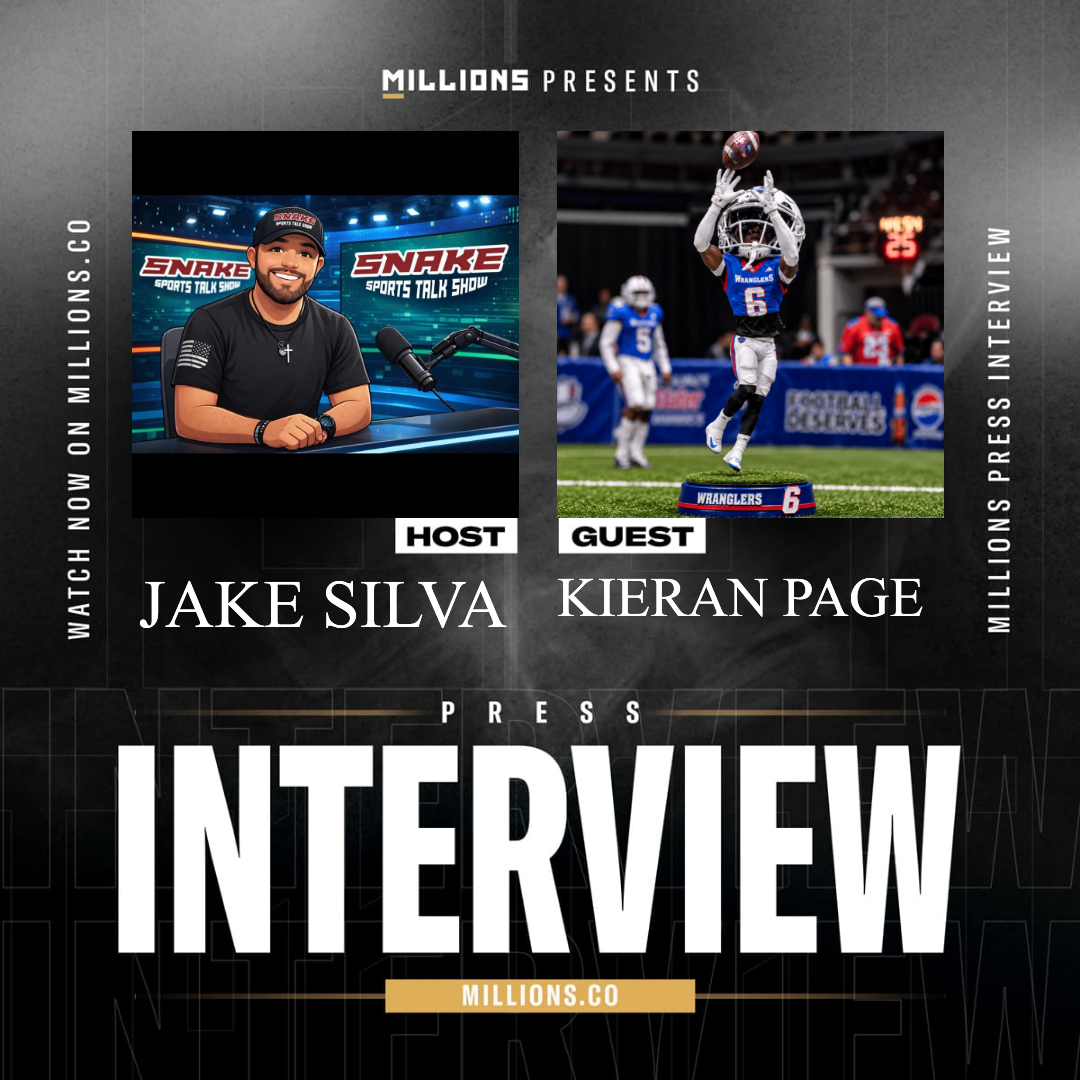
Kieran Page Jake Silva interview on Madden and defending receivers

Key takeaways
- Kieran Page said he studies the field, down and distance, and receiver alignment before choosing how to defend a route.
- Page favors a lockdown defense because stops can keep a team in a game even when its offense struggles.
- Page said Madden and College Football help him examine blocking schemes, formations and quarterback footwork.
- Page believes indoor football develops acceleration and reactions that can translate to outdoor play.
- Page said the Northern Arizona Wranglers value defenders who can learn multiple positions.
The Kieran Page Jake Silva interview ranged from how the Northern Arizona Wranglers defensive back takes away a receiver’s inside release to what Madden teaches him about blocking schemes. Page also explained why he favors a lockdown defense, how he views Kirk Cousins with the Minnesota Vikings, and what indoor football demands of a 6-foot-5 safety.
What did Kieran Page say about the Kansas City Chiefs and Buffalo Bills?
Kieran Page viewed Josh Downs as a useful addition for the Kansas City Chiefs, though he disliked the idea of the move as a Buffalo Bills fan. He was more enthusiastic about Armani Hooker’s potential effect on Buffalo’s secondary: a vocal safety, he argued, can help defenders recognize concepts and get aligned.
Josh Downs and the Chiefs’ receivers
Page described Downs as a receiver who could give Patrick Mahomes a dependable leading target. He also pointed to Xavier Worthy when discussing how Kansas City might arrange its receivers and noted that injuries can change those plans during an NFL season. His assessment was about fit, even as he acknowledged that a stronger Chiefs passing game would be unwelcome for a Bills fan.
Armani Hooker and communication in Buffalo
For Page, Hooker’s value went beyond an individual coverage assignment. A safety sees the field in front of him and can tell teammates what he recognizes before the snap. Page said a newcomer who speaks up rather than staying quiet can quickly make the rest of a defensive backfield more comfortable.
He connected that communication to film study and recognition of offensive concepts. Page attributed his view of defensive teamwork to the reactive nature of the job:
defense is nothing but reactions
That is why he considered a vocal presence at safety especially important: the player has to see the full picture while helping others react together.
Why did Kieran Page favor defense, and what did he say about Kirk Cousins and the Vikings?
Kieran Page would choose a lockdown defense over an offense that already has everything in place. He argued that stops can keep a team in any game, while a defensive score might supply points the offense cannot. On Minnesota, he saw Kirk Cousins’ play-action ability as a way to create space for Justin Jefferson and T.J. Hockenson.
Winning with stops
Page made the choice partly as a defensive back, but his reasoning was practical. If a defense keeps an opponent scoreless, he said, its offense needs to find points only once or twice. He was willing to accept a low-scoring win, including a 3-0 game, rather than assume a prolific offense must carry the team.
Cousins’ play action and Minnesota’s targets
Discussing Cousins with the Minnesota Vikings, Page focused less on the quarterback’s mobility than on his play-action fake. He said the threat of Jefferson deep could leave room for Hockenson at shorter distances, making the offense more explosive. He also thought Cousins’ familiarity with the system could help him feel comfortable and help another quarterback learn to play under center.
There was a video-game connection, too: Page said he used Cousins in Madden while the quarterback was with the Atlanta Falcons. That experience gave him a nickname for the player, “Kirk my cousin,” but his football point remained the same. In Page’s view, Cousins changes how defenders respond to a play fake.
How does Kieran Page defend wide receivers?
Kieran Page does not begin by matching his stride to a receiver’s size or speed. He first scans the field, considers down and distance, and uses film study to anticipate the concept. From there, the tall defensive back looks at alignment and foot position, aiming to deny the inside release and use his length to undercut throws.
Before settling on how to play a receiver, Page watches for motion and whether that player is on the line. Those details can help him judge the route that may be coming. He said taking away the inside forces a quarterback toward a more difficult throw and gives him a chance to break underneath it.
His positioning also depends on where a receiver moves relative to the hash marks. Page described reading whether the route is headed toward the numbers or might turn back upfield, then adjusting his depth while continuing to scan the rest of the field. The process is about the whole coverage picture, not just the opponent directly in front of him.
Why does Kieran Page value versatility on the Northern Arizona Wranglers?
Kieran Page said the Northern Arizona Wranglers value defenders who know multiple positions. A player who can move between assignments gives coaches more ways to build a scheme, while someone limited to one side of the field gives them fewer options. He has seen utility players make themselves useful by learning wherever the defense needs them.
Page applied that standard to defensive backs and linemen alike. A corner, he said, should not be able to play only the right side; the same principle applies to a defensive end. Knowing more than one job helps a player contribute when a lineup or matchup changes.
He linked that need to the range of skills he sees in current players, including agile defensive ends. As assignments become less rigid, Page believes flexibility matters more to both an individual defender and the coaches trying to use the full roster.
What did Kieran Page say about NFL draft prospects such as Jeremiah Smith?
Kieran Page said a high draft pick such as Jeremiah Smith needs more than individual ability to succeed immediately. In his view, opponents will study a prominent college player’s weaknesses before he reaches the National Football League, so the team selecting him must have other pieces that help him adjust to the attention.
Page did not pick a destination for Smith. Instead, he asked what a team would already have around him. He argued that a top-five pick becomes part of an opponent’s game plan from the start, regardless of position, because years of college film give defenders or offenses something to attack.
He used Travis Hunter to make a related point about expectations. Page objected to judging a new NFL player only against the biggest plays people expect to see, saying the professional game brings different physical demands. He described the transition as a period in which a player’s body and game are reshaped, rather than a finished college player arriving unchanged.
How does Kieran Page use Madden and College Football video games?
Kieran Page plays College Football and Madden partly to study how plays develop. He pays particular attention to blocking schemes, formations and quarterback footwork rather than treating a video game as a substitute for film. The games give him another way to test what might reveal a run or distinguish one passing concept from another.
Reading guards, formations and routes
In College Football’s Road to Glory mode, Page created a safety. He said he tends to look past familiar route concepts and study blocking instead: a guard’s movement can suggest where a play is going, though a convincing fake can complicate that read. He also watches how a quarterback sets his feet and how a formation might produce verticals, a smash concept or a spot route.
Those possibilities matter because similar alignments can produce different combinations. Page described how changing which player runs a spot route or a corner route can open a different part of the field. Working through those choices in a smaller digital setting, he said, sharpens the questions he asks when reading a play.
The slot fade and experiments from Madden
Page and his defensive back teammates talk about the slot fade as a particularly difficult route to cover. He sees the same problem in Madden: a defender can be beaten over the top or by a back-shoulder throw. He has also tried an approach he considered in the game—staying low to reach a runner’s ankle—in real life. It has worked a few times, he said, and on other attempts he was knocked down.
How does Kieran Page say indoor football develops defensive backs?
Kieran Page said indoor football develops the acceleration and reactions of a defensive back because the field and its walls compress the action. He believes those skills can carry back to outdoor football, where removing the walls gives a player more room to reach top speed. He also sees the expanding league as an opportunity for more varied opponents.
Page described himself as a 6-foot-5 safety who enjoys being a useful piece of the Wranglers’ defense without trying to play outside its system. His height can catch attention, he said, but indoor football also asks him to move quickly in tight space. The walls make a defender’s response to a developing play especially immediate.
He has noticed a change in the schedule as the league has expanded. Page recalled facing some opponents almost three or four times in his rookie year; now, he said, the Wranglers may see an opponent twice or only once. He welcomed that growth and the chance for indoor players’ work to be noticed.
Who is Kieran Page?
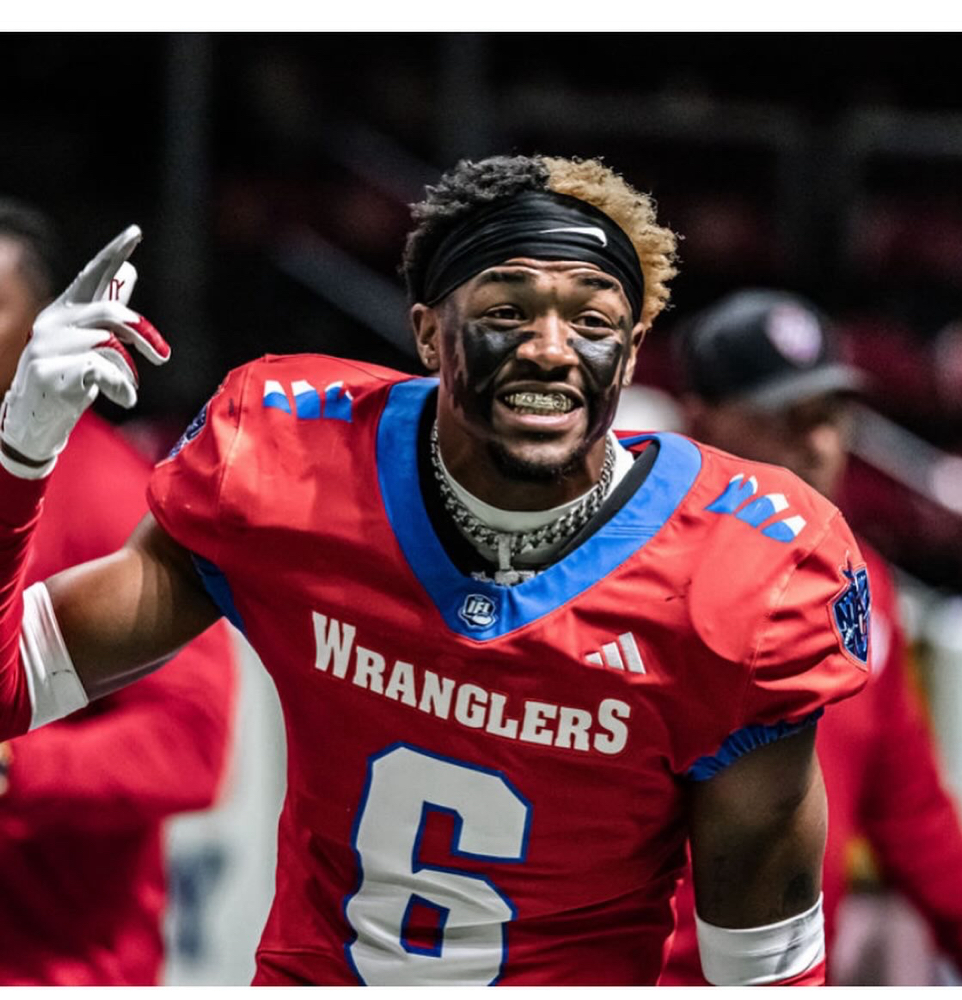
Kieran Page is a professional indoor football defensive back for the Northern Arizona Wranglers in the Indoor Football League. He is known for his physical play, football IQ, defensive playmaking and ability to create turnovers.
Watch the full interview
Questions from the interview
Is Kieran Page a Buffalo Bills fan?
Yes. Kieran Page called himself a Buffalo Bills fan while discussing the Kansas City Chiefs and Buffalo’s secondary.
What does Kieran Page look at before covering a receiver?
Kieran Page scans the field, considers down and distance, and uses film study before deciding how to play a receiver. He also checks motion, alignment and foot position.
How tall did Kieran Page say he is?
Kieran Page described himself as a 6-foot-5 safety while discussing his role in indoor football.
Does Kieran Page play College Football’s Road to Glory mode?
Yes. Kieran Page said he created a safety in College Football’s Road to Glory mode and uses the game to examine blocking schemes and play development.
What route does Kieran Page find especially hard to cover?
Kieran Page said he and his defensive back teammates consider the slot fade especially difficult because it can threaten a defender over the top or with a back-shoulder throw.
How often did the Wranglers face the same opponents in Page’s rookie year?
Kieran Page recalled facing some opponents almost three or four times in his rookie year. He said league expansion means the Wranglers now may face an opponent twice or only once.
In this interview

More from Jake Silva

News
News

News