
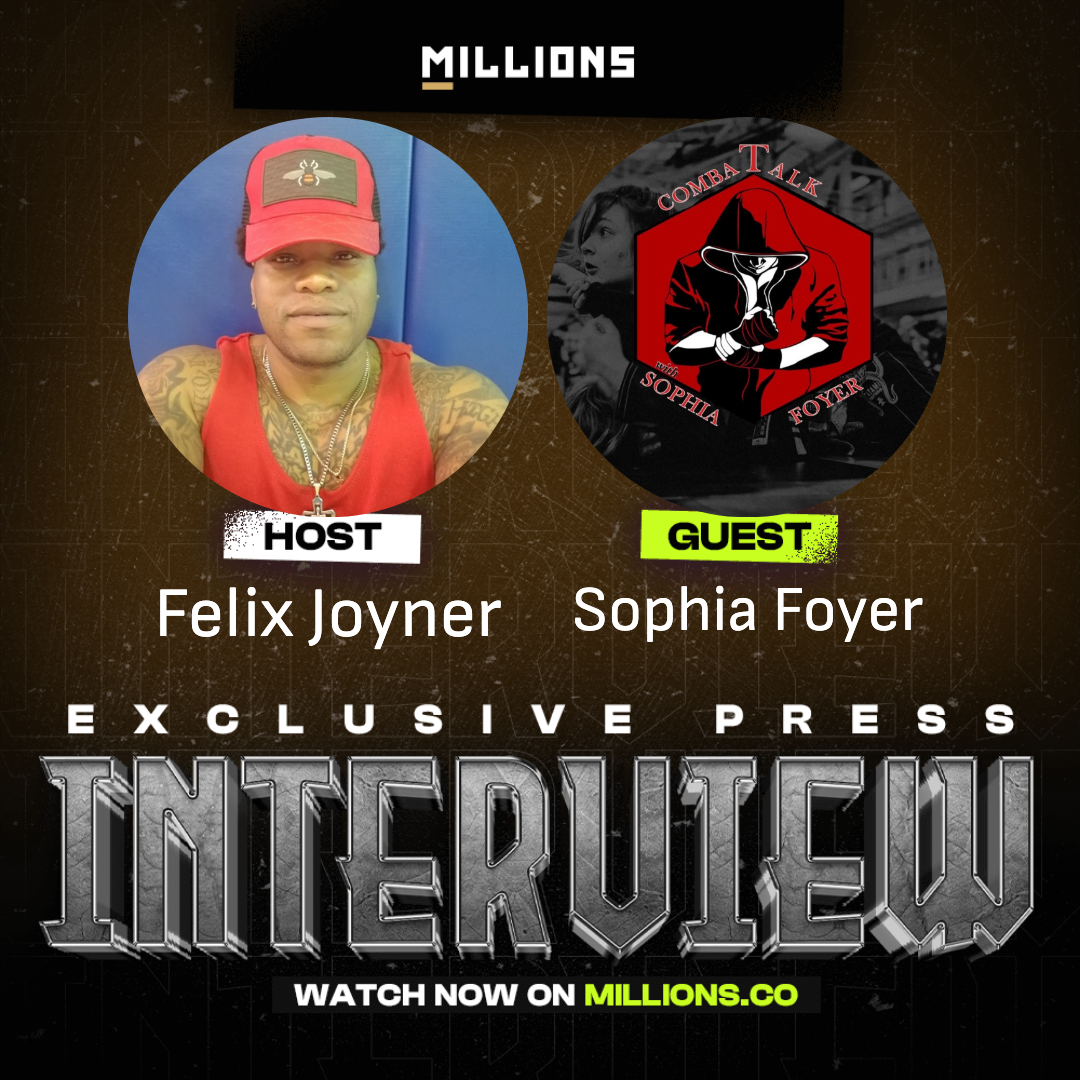
Sophia Foyer Felix Joyner interview on PFL Chicago and Combat Talk

Key takeaways
- Sophia Foyer called covering PFL Chicago her biggest media accomplishment and a third-place jiu-jitsu finish her biggest athletic accomplishment.
- Foyer began MMA training at 13 with Miguel Torres and said studying fights for Combat Talk later improved her sparring.
- Foyer said she received death threats after discussing a women’s UFC BMF title and argued that women need more opportunities in combat sports.
- Foyer runs and funds the Combat Talk podcast herself and keeps her UFC watch parties free.
The Sophia Foyer Felix Joyner interview covered the third-place jiu-jitsu finish that convinced Foyer she could compete seriously, why covering PFL Chicago became her biggest media accomplishment, and how studying fights for her Combat Talk podcast improved her sparring. She also told Joyner why women in MMA need more opportunities and why she keeps her UFC watch parties free.
How did Sophia Foyer start training with Miguel Torres and find success in jiu-jitsu?
Sophia Foyer began MMA training at 13 with Miguel Torres, whom she had known for years. She later added jiu-jitsu, started competing at 14 and placed third at a major tournament while she was a high school senior. Foyer called that finish her biggest athletic accomplishment because it showed her she could take competition seriously.
Before MMA, Foyer played softball and basketball and ran cross-country and track. She preferred being accountable for her own performance rather than sharing responsibility across a team. When her father suggested she try MMA, she began training with Torres, a former WEC and UFC fighter.
About a month later, COVID closures changed her routine. Torres asked her to help with Zoom kickboxing classes, and Foyer said she spent the following six months drilling for two or three hours each day. He was also the first person she sparred. Once training facilities reopened, she took up jiu-jitsu because Torres told her she would need a ground game if she wanted to fight.
Foyer was 17 when she earned third place at the major jiu-jitsu tournament. She described going back to school the following Monday, then realizing that people had begun to recognize her work. Coaching younger children became another source of pride: she said explaining techniques in different ways helped her as a teacher, while seeing the children she coached succeed helped her through periods of self-doubt.
Why did Sophia Foyer call PFL Chicago her biggest media accomplishment?
Sophia Foyer said covering PFL Chicago was her biggest accomplishment in media because it made years of interviews, study and preparation feel worthwhile. She secured access after Fight Night Chicago Z encouraged her to apply, and she learned she had been approved only a week before the event. The experience also expanded her connections with fighters and other media members.
Getting into the PFL Chicago media room
Foyer said she initially doubted that she would be allowed in. After receiving the approval email, she rushed to tell her father. At the event, she said she was the only woman in the media room, but her priority was whether she could ask good questions and make content her audience wanted to see.
She named conversations with Kobe Fair, Jenna Bishop, Angela Hill, Shannon Clark and Dakota Ditcheva among the moments that made the trip meaningful. Fair gave her a hat and walkout jacket and invited her to train at Xtreme Couture, she said. The event gave her a concrete sign that the work she had put into her podcast could lead to opportunities.
Building relationships beyond an interview request
Networking, in Foyer’s view, means getting to know people rather than treating them as a route to another guest. She credited conversations around the PFL event with helping her arrange an Angela Hill interview. She also recalled that after she interviewed Chael Sonnen, people asked her for his phone number; she declined to share it.
Rain Cruz helped her make connections on MILLIONS, Foyer said, and interviewing Johnny Vasquez led her to speak with more people there. Her advice to aspiring interviewers was to send the message, email a manager or introduce themselves at an event, while respecting a fighter who needs time after a bout.
Why did Sophia Foyer start the Combat Talk podcast and discuss women in MMA?
Sophia Foyer began Combat Talk as a livestream and radio show in a high school radio and television class, then continued it as a podcast after graduating. She said interviews with amateur fighters helped her persist when audience numbers made her doubt the project. She also uses the show to address issues she believes women in combat sports face.
Taking Combat Talk beyond school
Foyer said her first interview after reworking the podcast was with fight analyst Ian Parker. She had to build an audience again rather than assume earlier interview numbers would follow her. She runs the production herself, including editing, buying equipment and contacting guests, and has interviewed boxers as well as MMA athletes.
Those amateur-level conversations mattered to her because the athletes wanted their stories heard. Interviewing Sydney Leibach was another turning point: Foyer said Leibach’s experiences felt relatable and strengthened her decision to continue. She wanted Combat Talk to make room for subjects that other hosts might avoid.
Questions about opportunities for women
One episode discussed the idea of a women’s UFC BMF title. Foyer said she received death threats and hostile comments afterward. She explained that her purpose was to argue for more opportunities and representation for women, not simply to demand that a title be created.
She connected that argument to her own jiu-jitsu experience. Foyer said that as a teenager she sometimes competed against women in their late twenties or thirties because a bracket of girls her age was not guaranteed. She wants more young athletes to see women like themselves in combat sports and have more chances to compete.
How did Sophia Foyer’s UFC fight predictions improve her sparring?
Sophia Foyer said preparing UFC fight predictions made her study fighters’ habits closely enough to apply ideas in her own sparring. The recurring episodes also helped her stay committed to Combat Talk during periods of doubt. Rather than claim she knows a result in advance, she uses footage and notes to explain what might happen.
For each fighter she covers, Foyer watches a recent bout and writes down observations about technique, openings and possible adjustments. She said she has filled a second binder with prediction notes and has watched more than 50 hours of fight footage. Her preparation has included cards from UFC, PFL and ONE Championship.
That work began in her radio and television class, where she regularly prepared multiple cards. She kept publishing prediction episodes on Fridays because of the class’s original schedule and what that period meant to her. As she studied for the show, she started testing techniques she had noticed in fights during sparring and found that some worked for her.
Foyer distinguishes between an informed theory and a guaranteed outcome. She can assess footage and explain a matchup, she said, but she cannot know a fighter’s mindset or the result of a fight that has not happened.
What advice did Sophia Foyer give women entering MMA and jiu-jitsu?
Sophia Foyer urged women who are interested in MMA or jiu-jitsu to try training for themselves, without feeling obliged to spar or compete. She said a supportive training group matters, and she was equally clear that anyone who feels unsafe in a gym should leave without apologizing or waiting for permission.
She knows what it is like to be the only girl in a training room. During her first four years with Miguel Torres, she said, he included her in male fighters’ camps because of the skills and technique she could offer. She now welcomes the chance to train with more women and help newer athletes learn.
For Foyer, combat sports offer more than self-defense. Training can build confidence and give people a way to express their personalities, whether or not they want to fight. She told Joyner that coaching girls remains important to her regardless of how long she continues competing.
Foyer put her reason for staying involved in personal terms:
I feel at peace on the mat and I feel at peace in that cage
She said women who do not see themselves represented can become the person they once wanted to see, while making sure the people who train alongside them feel welcome and safe.
What did Sophia Foyer say about UFC watch parties and fights she wishes she had covered?
Sophia Foyer keeps her UFC watch parties free because she wants viewers to join the conversation without paying for her content. She invites disagreement backed by facts and uses her fight notes to answer questions. Asked which past bouts she wished she had covered, she chose fights featuring Jon Jones, Dan Hooker and prominent women’s MMA rivals.
Free watch parties with room for questions
Foyer said she had hosted roughly nine or ten UFC watch parties and felt more comfortable speaking with viewers each time. She wants fans to share their picks and ask about details such as striking technique. Although she prepares extensively, she said she listens to viewers rather than treating them as people whose opinions matter less than hers.
The fights Foyer wishes she had covered
Foyer named Dan Hooker versus Dustin Poirier as her favorite fight, saying its striking influenced how she thought about her own game. She also wished she had covered Jon Jones versus Alexander Gustafsson so she could analyze the action as it happened.
Among women’s bouts, she picked Cris Cyborg versus Amanda Nunes and the two fights between Joanna Jędrzejczyk and Cláudia Gadelha. Her choices reflected what draws her to both competing and covering fights: close attention to technique, the chance to explain it and the enjoyment of talking through different views with fans.
Who is Sophia Foyer?
Sophia Foyer is an MMA athlete and the host of Combat Talk, a podcast about people and issues across combat sports. She interviews athletes at different levels, discusses controversial subjects and breaks down topics for listeners who want to understand them better.
Watch the full interview
Questions from the interview
How old was Sophia Foyer when she began MMA training?
Sophia Foyer began MMA training at 13 with Miguel Torres. She started competing in jiu-jitsu at 14.
Where did Sophia Foyer place at the jiu-jitsu tournament she called her biggest athletic accomplishment?
Sophia Foyer placed third at a major jiu-jitsu tournament when she was 17 and a high school senior. She said the result helped her realize she could take competition seriously.
Who helped Sophia Foyer apply to cover PFL Chicago?
Fight Night Chicago Z encouraged Sophia Foyer to apply for media access to PFL Chicago. She said she learned she had been approved a week before the event.
Does Sophia Foyer produce Combat Talk herself?
Sophia Foyer said she runs Combat Talk herself, including editing, paying for equipment and contacting interview guests.
What did Sophia Foyer say happened after her women’s UFC BMF title discussion?
Sophia Foyer said she received death threats and hostile comments after discussing a women’s UFC BMF title. She said her aim was to call for more opportunities and representation for women.
Are Sophia Foyer’s UFC watch parties free?
Yes. Sophia Foyer said she keeps her UFC watch parties free so viewers can join the conversation without paying for her content.
In this interview


More from Felix Joyner

News
News

News