
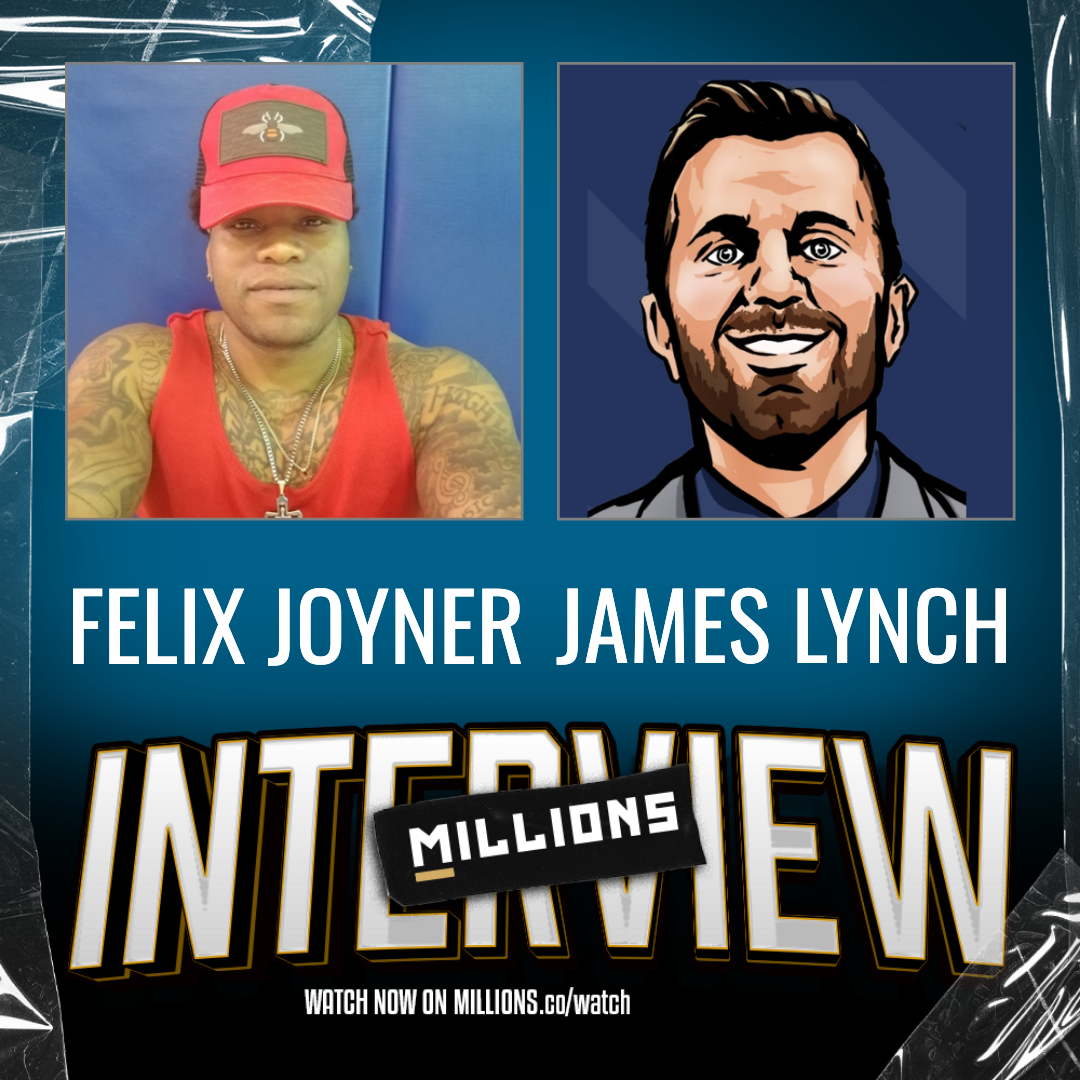
James Lynch Felix Joyner interview on MMA reporting and UFC 196

Key takeaways
- James Lynch left his day job in 2017 to cover MMA full-time, primarily through fighter interviews.
- Lynch said freelancing for several companies gives him more security than depending on one employer.
- Lynch said reporters should verify fight announcements with both camps before presenting them as confirmed.
- Lynch recommends regional MMA coverage as a way to report underserved stories and build relationships with rising fighters.
- Lynch said covering UFC 196 in Las Vegas helped convince him he could build a career in MMA journalism.
The James Lynch Felix Joyner interview on Millions.co covered Lynch’s 2017 move into full-time MMA journalism, his rule of checking fight news with both camps, and why regional coverage helped him build relationships with fighters such as Jamahal Hill. He also told Joyner why UFC 196 in Las Vegas remains a defining assignment.
How did James Lynch build his MMA journalism career?
James Lynch wanted to be a sports journalist in high school and initially pictured a career covering hockey. After discovering MMA while at university, he found an opening in a sport with fewer established reporters. Work at Fight Network, followed by freelance interviews, led to his decision to leave a day job in 2017 and cover MMA full-time.
From hockey to Fight Network
Lynch grew up playing hockey in Canada. Season one of The Ultimate Fighter aired while he was at university, and MMA became a new interest. He reasoned that hockey already had plenty of reporters, while MMA offered room to establish himself.
He attended university in Ottawa, took an internship in Toronto and then worked at Fight Network. Mauro Ranallo was there when Lynch started, and Lynch said he learned a great deal from him. His early work included editing and other behind-the-scenes tasks, though he wanted to be on camera.
Leaving a day job in 2017
After a couple of years at Fight Network, Lynch left and began freelancing. He started a YouTube channel, pursued on-camera work and obtained UFC media credentials. When his son was born in 2017, Lynch decided he could no longer treat the work as a side pursuit. He quit his day job and began making a full-time living primarily by interviewing fighters.
Why does James Lynch prefer freelance MMA journalism?
James Lynch prefers working for several companies because he does not have to depend on one employer for his income. He said the arrangement lets him replace work when an assignment ends and gives him control over when he completes interviews. At the time of the conversation, he estimated that he worked for six or seven companies.
Interviews, production and regional coverage
Lynch described a previous period of about a year and a half working for one company. He valued that experience but came away wary of putting all his work in one place. His freelance business now includes selling fighter interviews to companies, producing content and making The Gambler’s Perspective for MMAOddsbreaker.
For Spectation Sports, he mainly interviews regional MMA fighters rather than UFC athletes. He also speaks to competitors in other disciplines; shortly before talking with Joyner, he had interviewed someone preparing for a jiu-jitsu championship match. His assignments can be concentrated into a busy week or spread across a month, as long as the work is completed on time.
Relationships that last beyond the prelims
Lynch said he prepares the same way for an amateur fighter as he does for a prominent UFC name. He pointed to Jamahal Hill as an example of why early interviews matter: Lynch interviewed him when Hill was on the prelims of a card in Michigan, and they kept in touch as Hill’s career progressed. Lynch said those established relationships help him arrange interviews years later.
He also said Andy McNamara, a friend with whom he had worked, helped bring a Millions.co opportunity to his attention after it was time to move on from another company.
How does James Lynch verify UFC fight news and adapt his coverage?
James Lynch said a fighter’s claim about an upcoming bout is not enough to report it as confirmed: he wants sources verified and both camps checked. He applies that standard while adapting his work to YouTube and social platforms, where audiences expect prompt discussion of news and where false fight announcements can gain attention quickly.
When he hears about a fight, Lynch may go live on his channel and Millions.co to discuss the matchup, its context and his view of it. He sees an opportunity to deliver timely MMA news on YouTube, but he draws a line between discussing a development and presenting an unconfirmed announcement as fact.
He said some accounts post fake fight announcements for engagement, while other creators repeat a claim from one fighter without contacting the opposing camp. His advice is to verify sources and check both sides before reporting that a fight has been made. Lynch told Joyner that his responsibility to the audience takes priority over a potential spike in views:
I never will deceive my audience in anything that I do
That approach also shapes how he conducts interviews. Lynch said he generally does not ask fighters to pose for photos with him because he does not want to appear biased. He believes newer formats still call for established reporting practices, even as journalists improve their video, social content and presentation.
Why did James Lynch single out UFC 196 in Las Vegas?
James Lynch called UFC 196 the assignment that stands out most from more than a decade of covering UFC events with media credentials. It was the first card he covered in Las Vegas, and he watched Nate Diaz submit Conor McGregor after Miesha Tate beat Holly Holm. For Lynch, that night reinforced his belief that MMA journalism could be his career.
Before UFC 196, Lynch said he had mainly covered cards in Canada because the travel was more practical. Las Vegas gave him a different experience, with Irish fans in town for McGregor and two major upsets on the same card. He recalled Holm entering her fight as the favorite before Tate won; Diaz then defeated McGregor in the following fight.
Lynch has covered UFC 200 and UFC 300 and has seen a number of McGregor fights. He also worked a red carpet for the Floyd Mayweather–McGregor fight. Even with those assignments to choose from, he returned to UFC 196 as the moment that helped convince him he could stay in the field.
What advice did James Lynch give aspiring MMA journalists about regional coverage?
James Lynch advised aspiring MMA journalists to learn from people doing the work well, seek candid feedback and cover more than the UFC. He believes regional promotions, jiu-jitsu and international MMA offer stories that receive less attention. Those assignments can also help a reporter build relationships with fighters before they become widely known.
He questioned whether everyone entering content creation needs the same formal education he received, noting how much production has changed since he learned to work with tape. Rather than relying only on praise from friends and family, he recommended showing work to people willing to identify specific improvements. He said he gives that kind of direct feedback when creators ask him to review their content.
Lynch understands why new reporters cover the UFC: it draws the largest audience. But he thinks a mix of UFC and regional coverage gives them a better chance to stand out. He identified fight results from promotions outside the UFC as an underserved area, particularly for the friends, families and local communities following those competitors.
His own experience informs that advice. Some fighters he interviewed early in their careers later became notable UFC names. Even when a regional story draws fewer views at first, Lynch sees value in reporting it carefully and maintaining the connection.
What did James Lynch say about upcoming UFC coverage and gratitude?
James Lynch expected to finish his work year with more fighter interviews and year-end content. He also mentioned a forthcoming UFC event involving Charles Oliveira and Diego Lopes. Away from reporting, his parting advice was to practice gratitude each morning by identifying three things that are going well.
Interviews and year-end content
Lynch said his remaining work would center on interviews before he turned to year-end material. He described the UFC’s break around December and January as brief compared with other sports’ offseasons. Discussing an upcoming numbered card, he pointed viewers to a prediction he had already posted on his Millions.co channel about Oliveira and Lopes.
Three things to be grateful for
Joyner asked Lynch what one thought he would leave with viewers. Lynch chose gratitude, suggesting that people think each morning about three things they appreciate, such as health, family, a home or paid work. He said social media is useful to his job but can also be divisive, making it easy to lose sight of what is going well.
Who is James Lynch?
James Lynch is a Canadian mixed martial arts journalist and producer based near Vancouver. He covers MMA for Home Of Fight and Spectation Sports, produces The Gambler’s Perspective on MMAOddsbreaker and belongs to the Canadian Journalists Association.
Watch the full interview
Questions from the interview
When did James Lynch leave his day job?
James Lynch left his day job in 2017, after his son was born, to work full-time covering MMA.
How did Mauro Ranallo help James Lynch?
James Lynch worked alongside Mauro Ranallo at Fight Network early in his career and said he learned a great deal from him.
How many companies did James Lynch work for at once?
James Lynch estimated that he worked for six or seven companies at the time of his conversation with Felix Joyner.
Did James Lynch interview Jamahal Hill before he became well known?
Yes. James Lynch said he interviewed Jamahal Hill when Hill was on the prelims of a card in Michigan, and the two maintained their professional relationship.
What should MMA reporters check before announcing a fight?
James Lynch said reporters should verify their sources and check with both fighters’ camps rather than rely on a claim from only one side.
Which UFC card did James Lynch first cover in Las Vegas?
James Lynch said UFC 196 was the first card he covered in Las Vegas. It featured Nate Diaz against Conor McGregor and Miesha Tate against Holly Holm.
In this interview

More from Felix Joyner
News
News
News