
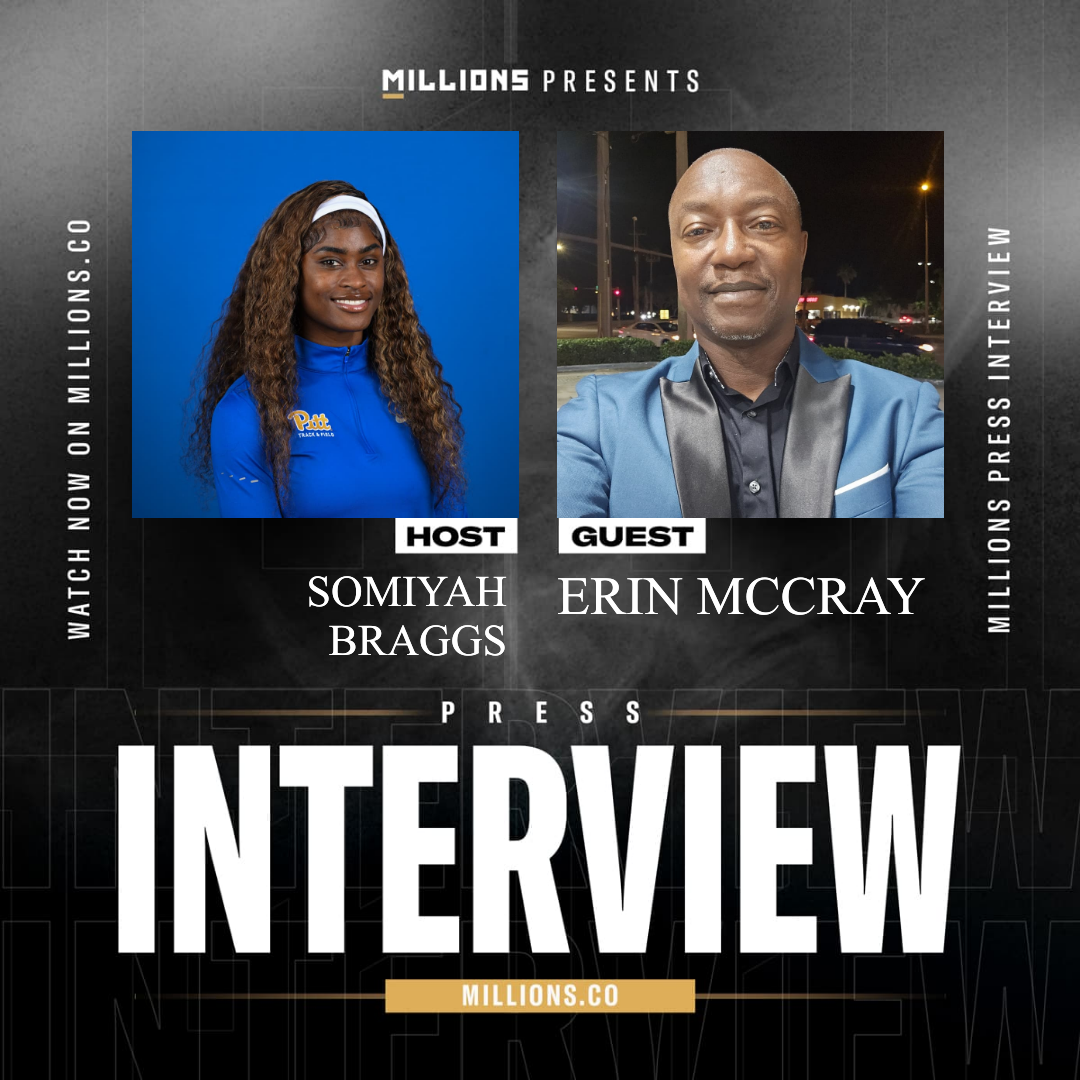
Erin Mccray Somiyah Braggs interview on track athlete mental health

Key takeaways
- Erin Mccray said coaches should get to know athletes beyond track and field to support their mental health.
- Mccray said Robert Morgan brought him into football coaching and that he is in his 24th year as a coach.
- Mccray urged track athletes to focus on their own progress rather than compare themselves with others.
- Mccray advised aspiring collegiate athletes to communicate with coaches, prioritize recovery and believe in themselves.
- Mccray encouraged Somiyah Braggs to develop her interviewing skills as an avenue beyond athletics.
The Erin Mccray Somiyah Braggs interview brought the former Southridge coach and athlete together to discuss why mental health matters in track and field, how athletes build confidence, and what young runners should know before competing in college. Mccray, the head coach at Miami-Southridge Senior High School, also explained how Robert Morgan brought him into coaching and why athletes should prepare for life beyond sport.
How did Erin Mccray get into coaching at Southridge?
Erin Mccray said coaching was not part of his plan when he finished school. Robert Morgan, his brother and a former principal at Southridge, brought him into football coaching. Mccray began helping with both football and track after he started teaching in 2003, and he said this is his 24th year of coaching.
Robert Morgan’s invitation to coach football
Mccray had played football and competed in track at Southridge, but participating in those sports had not made him expect to coach them. He credited Morgan with opening that path through football. Looking back, Mccray described coaching as a direction he had not anticipated after graduation.
Teaching and helping with track
Once he began teaching, Mccray helped with football and track, and that work drew him further into coaching. What has kept his attention is the growth he sees between an athlete’s introduction to track and graduation. That applies whether an athlete arrives with AAU experience or is learning the sport for the first time. He said former athletes sometimes tell him they never thought they could accomplish what they eventually did.
How does Erin Mccray motivate track athletes who are struggling?
Erin Mccray said he starts by helping athletes understand what their training is meant to accomplish. He also shows them how former athletes worked through similar difficulties, rather than treating a disappointing stretch as proof that they cannot improve. His aim is to help each athlete recognize a possible path forward and give the sport a chance.
Mccray said a past athlete’s progression can make a lesson more concrete for someone facing the same kind of challenge. He does not present that athlete’s work as a formula everyone must copy: what a current athlete can do depends on that individual. The comparison is useful when it shows that difficulty can be part of development.
He also draws on accounts athletes encounter on social media. Mccray described sharing a person’s story in a chat and asking whether the experience sounds familiar. Those examples, alongside conversations about training, can help athletes stay engaged when their own results are not arriving as quickly as they hoped.
What did Erin Mccray say about mental health in track and field?
Erin Mccray said mental health can determine whether an athlete stays engaged and develops in track and field. Coaches should learn who an athlete is beyond the sport, speak with them about growing pains, and be careful about when and how they enter competition. He sees patience and conversation as part of preparing an athlete.
Choosing an appropriate race or relay
Mccray pointed to the depth of track talent in Miami as one reason to think carefully about an athlete’s first competitive experiences. Putting someone in the wrong race at the wrong time can be hard on them, he said. A relay can instead give a developing athlete a way to take part while becoming accustomed to competition.
Conversations beyond meet results
He urged coaches to find out what is troubling an athlete rather than assume every difficult period is about performance. Results, he noted, will not necessarily improve meet by meet. A coach can explain that progress takes time and talk an athlete through a stretch when the work does not yet appear in their results.
Braggs shared why that attention matters to her. She said a head coach during her freshman year did not know she had been dealing with mental health difficulties until he read her ebook, Strong Mind, Strong Gang. Mccray agreed that getting to know an athlete beyond the sport is important.
How does Erin Mccray build athlete confidence in track?
Erin Mccray said confidence grows when athletes connect what they can do in practice with what they may be able to do at a meet. He also cautioned against measuring their progress against someone else’s. Coaches, he said, need to notice when an athlete seems different and make room for a conversation.
Some athletes like particular workouts and dislike others. Mccray uses those sessions to point out what an athlete has already managed and how that work relates to competition. At the same time, he wants athletes to focus on their own development instead of asking why another person can do something they cannot yet do.
When he notices something is off, Mccray said he may pull an athlete out of practice and speak with them away from the session. Understanding what is happening can help him communicate relevant concerns to another coach and support the athlete through the psychological demands of the sport.
What does Erin Mccray remember about coaching Somiyah Braggs?
Erin Mccray remembers Somiyah Braggs as fierce and confident. He said she understood that workouts might need to change as she moved from middle school through high school and toward college, while remaining determined to become the best athlete she could be. Her belief in her ability stood out to him.
Asked what he remembered most, Mccray began with a direct assessment of her approach: “You were fierce. You were confident.” He also recalled that Braggs could recognize what worked for her in training and what did not, a judgment he expected to keep evolving as she advanced.
Mccray said her ability was there, but the work required adjustments along the way. He treated her confidence not as a substitute for those changes, but as a quality that helped her continue making them.
What advice did Erin Mccray give aspiring collegiate track athletes?
Erin Mccray urged aspiring collegiate athletes to tell coaches what they are feeling, take recovery as seriously as workouts, and believe in their own work. Coaches can assign training without knowing everything an athlete is experiencing in their body, he said, so athletes need to communicate rather than stay silent.
Mccray put his central advice plainly:
Know who you are. Don't be afraid to express what you're feeling to the coach.
He also mentioned lifting and recovery as ways to keep the body ready to perform without feeling as though every effort must be forced. His advice returned to the comparison he had warned against earlier: athletes should not judge their prospects by somebody else’s progress.
Why did Erin Mccray encourage Somiyah Braggs to pursue work beyond sport?
Erin Mccray encouraged Somiyah Braggs to keep developing her interviewing and technology skills because athletics will not last forever. He saw her work as another way to remain connected to sport while exploring what might come next, and he urged her to think about the transition to another phase of life.
After discussing advice for athletes, Mccray turned to Braggs’s own project. He told her she was doing well with her podcast and interviews, and described that work as a different side of an athlete that people could see. For him, staying involved did not have to mean competing indefinitely.
He encouraged Braggs to take advantage of the technology she was using and consider how she could expand her work and public presence. Mccray’s point was practical: athletes do not know what will happen over the long term, so developing another avenue while they are still involved in sport can help them prepare for what follows.
Watch the full interview
Questions from the interview
Who brought Erin Mccray into football coaching?
Erin Mccray said his brother Robert Morgan, who was a principal at Southridge, brought him into football coaching.
How long has Erin Mccray been coaching?
Erin Mccray said he is in his 24th year of coaching. He began helping with football and track after starting to teach in 2003.
Does Erin Mccray recommend relays for developing athletes?
Erin Mccray said a relay can help a developing track athlete become accustomed to competition rather than being placed in the wrong race too soon.
What did Erin Mccray say was Somiyah Braggs’s standout quality?
Erin Mccray said Somiyah Braggs’s confidence stood out when he coached her. He also described her as fierce and determined.
What should aspiring collegiate athletes tell their coaches?
Erin Mccray advised aspiring collegiate athletes to tell coaches what they are feeling, including what is happening with their bodies during training.
In this interview

More from Somiyah Braggs

News

News

News