

Faris Haddad Ram At The Fights interview on his next bout

Key takeaways
- Faris Haddad is training to face a southpaw from the United States Air Force, although he has not seen the opponent fight.
- Haddad played quarterback and trained for football at Pennsylvania State University before moving to USC and transitioning to boxing.
- Haddad said he now places his shots more carefully and adjusts to opponents instead of relying on his football instincts to brawl.
- Haddad has fought once in Santa Clara and twice in Las Vegas, and he studies economics and finance at USC.
- Haddad said he is taking his boxing future day by day rather than committing to the Olympics or a professional career.
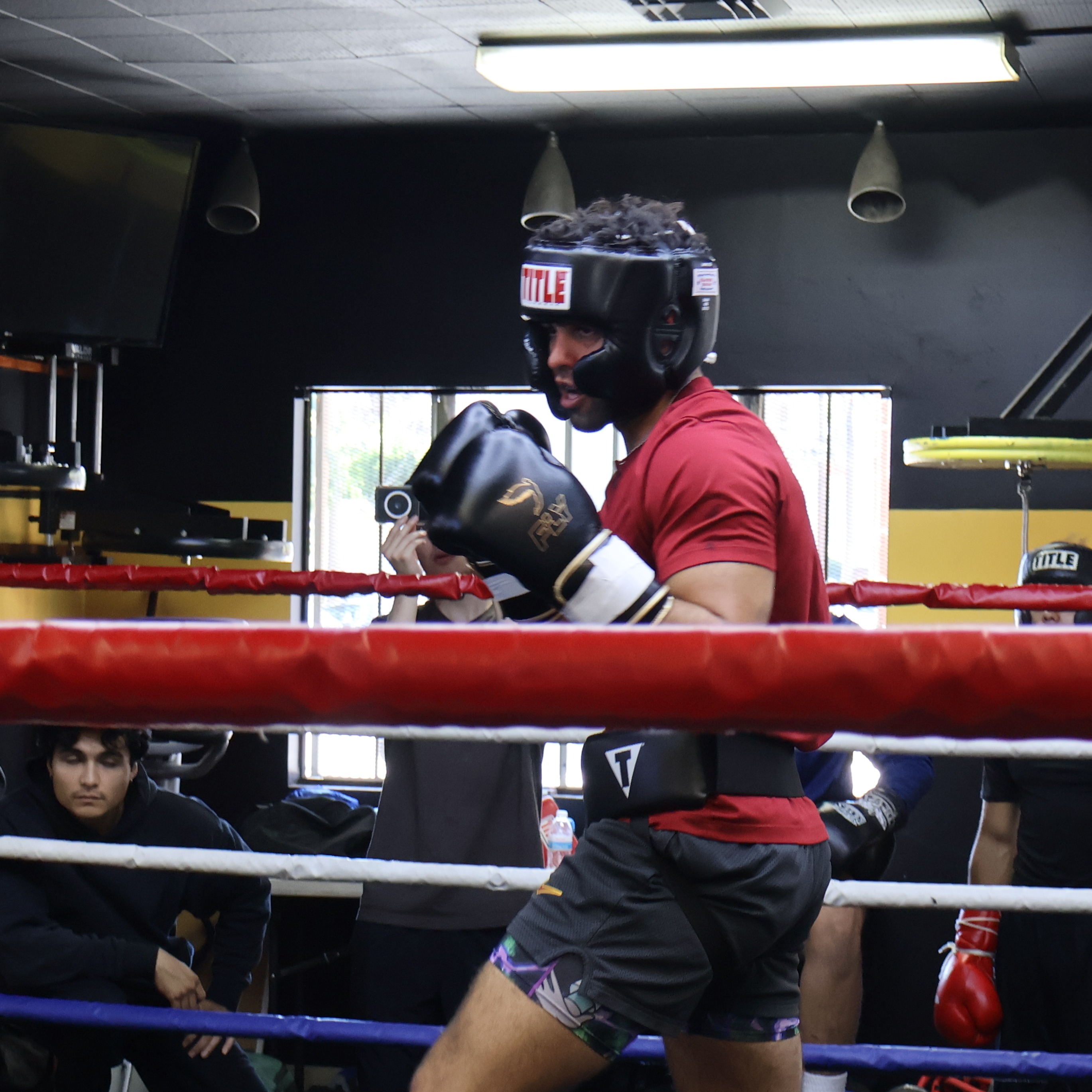
In the Faris Haddad Ram At The Fights interview, the University of Southern California boxer told me he is preparing for a southpaw from the United States Air Force at USC versus UCLA intercollegiate boxing night. He also discussed his move from football at Pennsylvania State University to boxing at USC and why he now studies opponents rather than relying on a brawl.
What did Faris Haddad say about his next fight at USC versus UCLA intercollegiate boxing night?
Faris Haddad said he expects a good matchup with an Air Force boxer, although he has not seen his opponent fight. He knows the opponent is a southpaw and has trained for that stance. Haddad expects to box technically on the card rather than simply trade punches.
The Air Force southpaw
Haddad described a strong training camp built around preparing for his opponent and getting different looks against southpaws. He said the only thing he knows about the boxer’s style is that he fights southpaw. His expectation of a good matchup comes from his view that Air Force boxers generally fight well, not from having studied this particular opponent’s bouts.
His weight cut has involved dropping some weight, but Haddad said it has not been too drastic and that he feels good. He did not offer a prediction about the result. Instead, he said he has trained hard and is ready to show the technical side of his boxing.
What the USC versus UCLA card means
Despite the event’s USC versus UCLA name, Haddad clarified that his own opponent is from Air Force. He understood that one bout on the card was a USC-UCLA matchup and that most of the other bouts would feature at least one USC boxer. Haddad represents USC, but he did not describe his fight as a meeting with a UCLA athlete.
What did Faris Haddad say about USC boxing and football?
Faris Haddad said he trained for football at Pennsylvania State University, came to USC with football in mind and then transitioned to boxing. He played quarterback, a role he believes prepared him to make decisions under pressure. In the ring, that responsibility has narrowed from directing a team to directing himself.
From quarterback to boxer
Haddad described both football and boxing as intense sports. As a quarterback, he thought of himself as an orchestrator; boxing calls for the same sense of control without teammates to direct during a contest. Haddad put the difference this way:
just being the orchestrator of myself
He did not describe a background in combat sports before football. Asked whether he had practiced one when he was younger, he said he had not really done so. His boxing has therefore required him to develop skills and habits distinct from those he brought from the football field.
Economics and finance at USC
Alongside his athletic commitments, Haddad studies economics and finance at USC. He did not present a detailed plan for balancing those subjects with training, but both are part of his current university life. His route to USC began with football; boxing became another focus after he arrived.
How have USC teammates and earlier bouts shaped Faris Haddad’s boxing?
Faris Haddad said having fellow USC boxers on the card helps, even though boxing remains an individual sport. He has already fought once in Santa Clara and twice in Las Vegas. Those appearances give him points of comparison as he prepares to compete alongside teammates again.
Teammates on the card
Haddad looked forward to watching his college teammates perform. Sharing the event with them offers camaraderie around a sport in which each boxer ultimately competes alone. He agreed that having them nearby can make the experience easier, without suggesting that they can take over any part of his fight.
Santa Clara and Las Vegas
His earlier boxing appearances took him to Santa Clara for one fight and Las Vegas for two. Haddad did not give opponents, results or dates for those bouts. What he emphasized instead was the difference between how he approached those fights and how he now expects to handle an opponent.
Early on, Haddad felt his football instincts could take over and push him toward rough exchanges. That experience has become a reference point for the more measured approach he wants to use at USC versus UCLA intercollegiate boxing night.
How has Faris Haddad become a more technical boxer?
Faris Haddad said his improvement goes beyond combinations and technique: he now places his shots more carefully, reads the person in front of him and adjusts during a fight. Earlier, he felt more inclined to brawl and follow his football instincts without fully understanding what his opponent was doing.
He described his former approach as wanting to rough it out. That made the contest more about what he wanted to do than about responding to the boxer opposite him. Haddad now sees diagnosing an opponent as part of the fight itself, rather than something to set aside once the action starts.
That shift also explains his emphasis on getting different southpaw looks in camp. He has not seen his upcoming opponent box, so he cannot claim to have worked out that individual’s patterns. His preparation has focused on the stance he knows about and on being ready to make decisions as the bout develops.
Haddad expects a technical fight and wants to put on a show. In his account, those aims fit together: the change he is most eager to demonstrate is not simply greater aggression, but better shot selection and the ability to adjust.
What did Faris Haddad say about Deontay Wilder and watching fights?
Faris Haddad said Deontay Wilder was one of his favorite fighters to watch, chiefly because he found Wilder entertaining. He watched more Ultimate Fighting Championship events than boxing when he was younger, though he also followed major boxing fights, particularly during high school. He stopped short of calling any fighter a direct inspiration.
Wilder stood out to Haddad for the show he put on. Haddad acknowledged that he did not regard Wilder as the best technical boxer, but that was not the reason he watched him. Entertainment was the quality he singled out.
That distinction matters alongside Haddad’s description of his own development. He admires watching an exciting fighter while aiming to become more technical himself. He did not say that he models his boxing style on Wilder’s or that watching him caused the transition from football to boxing.
What are Faris Haddad’s plans for his boxing future?
Faris Haddad said he is taking boxing day by day and enjoying the process rather than committing to an Olympic path or a professional career. He did not rule either possibility out. For now, his attention is on the upcoming fight and on continuing to develop as a boxer.
Asked about longer-term goals, Haddad resisted naming a specific destination. He said neither an Olympic attempt nor turning professional is particularly on his mind at present, but he also would not give either a definite no. How things develop will shape any later decision.
His immediate goal is more concrete. After a camp focused on a southpaw, Haddad wants to deliver the technical performance he has been working toward. It is an opportunity to apply the adjustments he says distinguish his current boxing from his earlier bouts in Santa Clara and Las Vegas.
Who is Faris Haddad?
Faris Haddad is a dual-sport collegiate athlete from Los Angeles, California, who boxes for the University of Southern California and also plays football. His athletic work spans the ring and the football field while he pursues his goals at the university level.
Watch the full interview
Questions from the interview
Is Faris Haddad fighting a UCLA boxer?
No. Faris Haddad said his opponent at USC versus UCLA intercollegiate boxing night is from the United States Air Force.
Has Faris Haddad seen his next opponent fight?
Faris Haddad said he has not seen his next opponent fight. He knows the boxer is a southpaw and has trained for that stance.
What position did Faris Haddad play in football?
Faris Haddad played quarterback. He said the position’s decision-making responsibilities carry over to how he directs himself in the boxing ring.
Where has Faris Haddad boxed before?
Faris Haddad said he has fought once in Santa Clara and twice in Las Vegas.
What does Faris Haddad study at USC?
Faris Haddad studies economics and finance at the University of Southern California.
Does Faris Haddad plan to turn professional?
Faris Haddad has not committed to turning professional. He said he is taking boxing day by day and has not ruled out that possibility.
In this interview

More from Ram At The Fights

News

News

News