
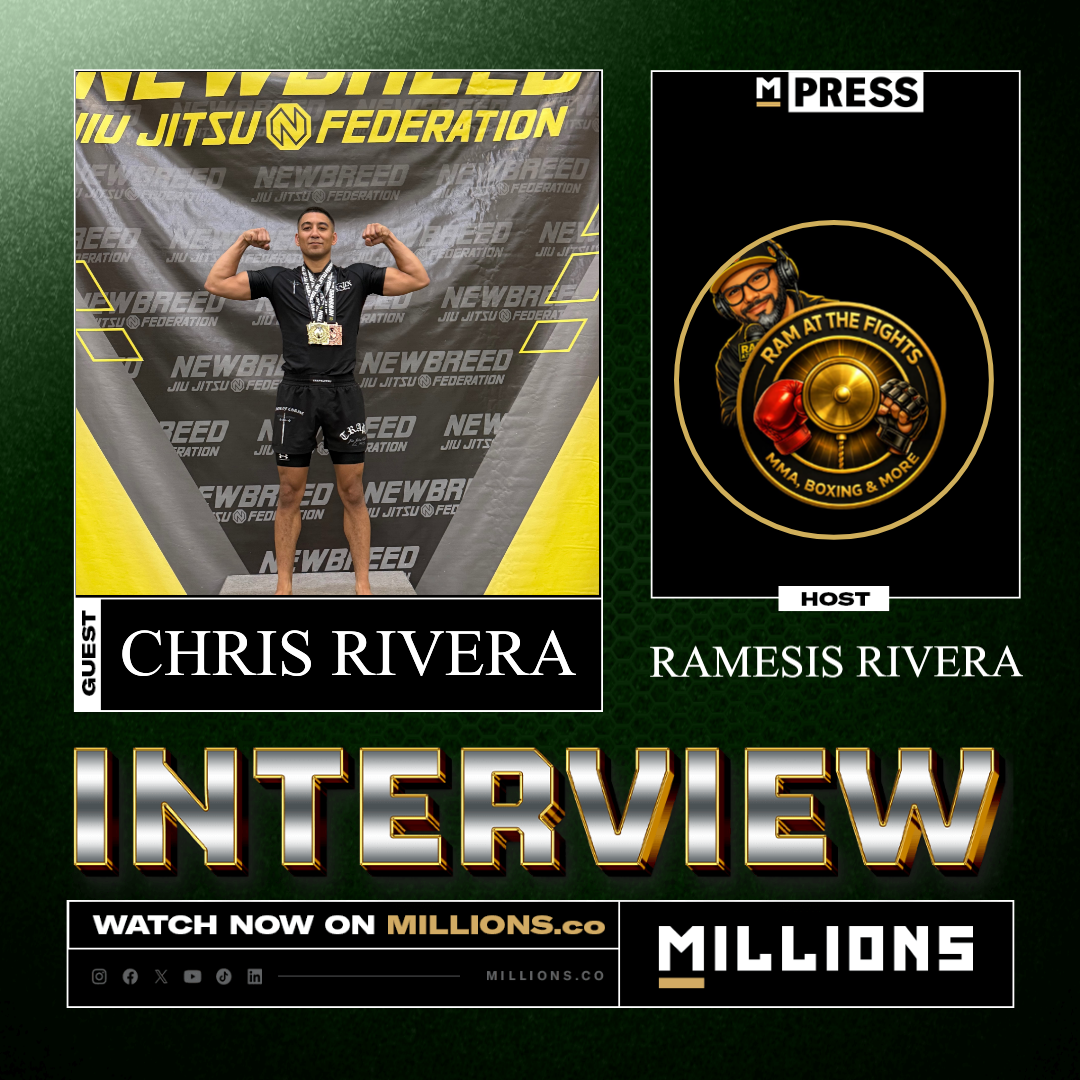
Chris Rivera Ram At The Fights interview on his first superfight

Key takeaways
- Chris Rivera said Scrap Superfight 7 will be his first superfight.
- Rivera plans to push the pace on November 22 and hopes for a quick submission and the belt.
- Rivera wrestled at Limestone College, graduated in 2017 and began jiu-jitsu about two years before the interview.
- Rivera said work and other responsibilities prevented him from dedicating himself to MMA full-time.
- Rivera hopes to compete at the same tournament as his son someday.
The Chris Rivera Ram At The Fights interview covered Rivera’s first superfight at Scrap Superfight 7, his move from wrestling at Limestone College into jiu-jitsu, and his hope to compete at the same tournament as his young son someday. Rivera plans to push the pace on November 22 and pursue a quick submission and the belt.
How is Chris Rivera preparing for his first superfight at Scrap Superfight 7?
Chris Rivera said Scrap Superfight 7 will be his first superfight. He has added wall wrestling to his gym work but is otherwise sticking with his usual approach: jiu-jitsu practice, running and other cardio. He expects some nerves when the attention turns to his match, though his years of competition give him confidence they will pass.
Wall wrestling and a familiar game plan
Rivera has been trying to get to the gym two or three times a week. For a typical week, his target is three jiu-jitsu sessions and at least two days of running, along with some lifting or biking. A bike ride can be as long as 25 miles. Cardio remains a priority because, as he put it, he strives on it.
His gym has worked on wall wrestling for the superfight, a change from his usual tournament preparation. Beyond that, Rivera intends to stay with his normal game plans. He said he feels confident in his grappling rather than needing to remake his approach for a different competitive setting.
Nerves and his approach to the opponent
A superfight puts the focus on one matchup rather than a tournament with activity across multiple mats. Rivera acknowledged feeling a little nervous about that attention. He also said he has competed throughout his life and expects the feeling to go away once he gets out there.
He has chosen not to spend much time looking into his opponent. Studying the matchup had begun to feel distracting, he said, so his immediate focus is training. That decision reflects how he wants to use the weeks before November 22: sharpen what he already does rather than shift his attention away from preparation.
How did Chris Rivera move from wrestling at Limestone College to jiu-jitsu?
Chris Rivera wrestled throughout his life, including at Limestone College, where he graduated in 2017. He began jiu-jitsu about two years ago after a friend invited him to a gym. Although he felt fit from wrestling, his first visit left him badly winded and showed him how different the demands of jiu-jitsu could be.
A friend’s invitation to the jiu-jitsu gym
After college, Rivera entered a couple of wrestling tournaments for fun. His route into jiu-jitsu came later, when a friend who had been training urged him to visit the gym. Rivera went, discovered that his conditioning did not carry over as neatly as he expected, and kept coming back.
He considers his wrestling experience a major part of why the transition has worked for him. Rivera has seen other wrestlers struggle when they come to the gym, but he believes a lifetime of competing helped him adapt. The confidence he describes comes from that experience, not from assuming the two sports are identical.
Learning to pull guard
One adjustment has been working from positions he did not favor as a wrestler. Rivera said he started practicing pulling guard during roughly the last six months because he recognized that he needed to understand and handle those situations in jiu-jitsu.
He is still learning that side of the sport while keeping the competitive habits he developed in wrestling. Rivera called wrestling his first love, but said he is trying to adapt to the jiu-jitsu game rather than rely only on what he already knows from the stand-up phase.
Why did Chris Rivera set aside his MMA aspirations?
Chris Rivera said he once had aspirations in MMA but could not give it the full-time commitment he felt it required. Work and other responsibilities changed what he could pursue. He continues to compete in jiu-jitsu, where his wrestling background remains useful without requiring him to commit to an MMA career.
Asked whether striking practice or an MMA goal figured into his plans, Rivera looked back on that earlier ambition rather than describing an active move toward MMA. He said life and the need to work got in the way of dedicating himself to it fully.
His current preparation is centered on grappling: jiu-jitsu sessions, wall wrestling and conditioning. Rivera did not present the superfight as a step toward a change of sport. His stated focus was getting ready to compete at Scrap Superfight 7.
What does Chris Rivera hope to share with his son through competition?
Chris Rivera hopes that he and his son will one day compete at the same tournament and both win. His son turned two in June, and Rivera said he is already trying to introduce him to training. The shared tournament is an ambition for the future, not a competition they have entered together.
The idea came up when Rivera discussed how work and family fit alongside his athletic goals. Rather than return to his former MMA aspirations, he spoke about a goal that would let his son take part in the kind of competition that has been present throughout Rivera’s own life.
Rivera described competing at the same tournament and winning together as his ultimate goal. He gave no timetable for it. For now, his son is young, and Rivera is the one preparing to compete.
What does Chris Rivera want to do at Scrap Superfight 7?
Chris Rivera wants to set a fast pace at Scrap Superfight 7 on November 22. He hopes for a quick submission and to leave with the belt, while making clear those are goals rather than guaranteed outcomes. His plan is consistent with the confidence he expressed in his grappling and his emphasis on conditioning.
Rivera did not describe a specific submission or say he had built a plan around studying his opponent. He wants to bring his own style into the match and keep pressing, drawing on the competition experience he has carried from wrestling into jiu-jitsu.
Asked what people should expect from him, Rivera gave the clearest statement of that approach:
i'm gonna push the pace
That intent ties together the work he described in the gym and outside it. The wall-wrestling sessions address the superfight setting, while his running, biking and jiu-jitsu practice support the pace he wants to maintain when he competes.
Watch the full interview
Questions from the interview
Is Scrap Superfight 7 Chris Rivera’s first superfight?
Yes. Chris Rivera said Scrap Superfight 7 will be his first superfight.
How often does Chris Rivera train jiu-jitsu?
Chris Rivera said he aims for three jiu-jitsu practices a week, along with at least two days of running and some lifting or biking.
When did Chris Rivera graduate from Limestone College?
Chris Rivera graduated from Limestone College in 2017 and wrestled for the college.
How long has Chris Rivera trained jiu-jitsu?
Chris Rivera said he began training jiu-jitsu about two years before the interview, after a friend invited him to a gym.
Does Chris Rivera study his superfight opponent?
Chris Rivera said he was not spending much time looking into his opponent because it felt distracting. He wanted to stay focused on training.
Does Chris Rivera want to compete with his son?
Yes. Chris Rivera said his ultimate goal is for him and his son to compete at the same tournament and both win.
In this interview


More from Ram At The Fights
News
News

News