
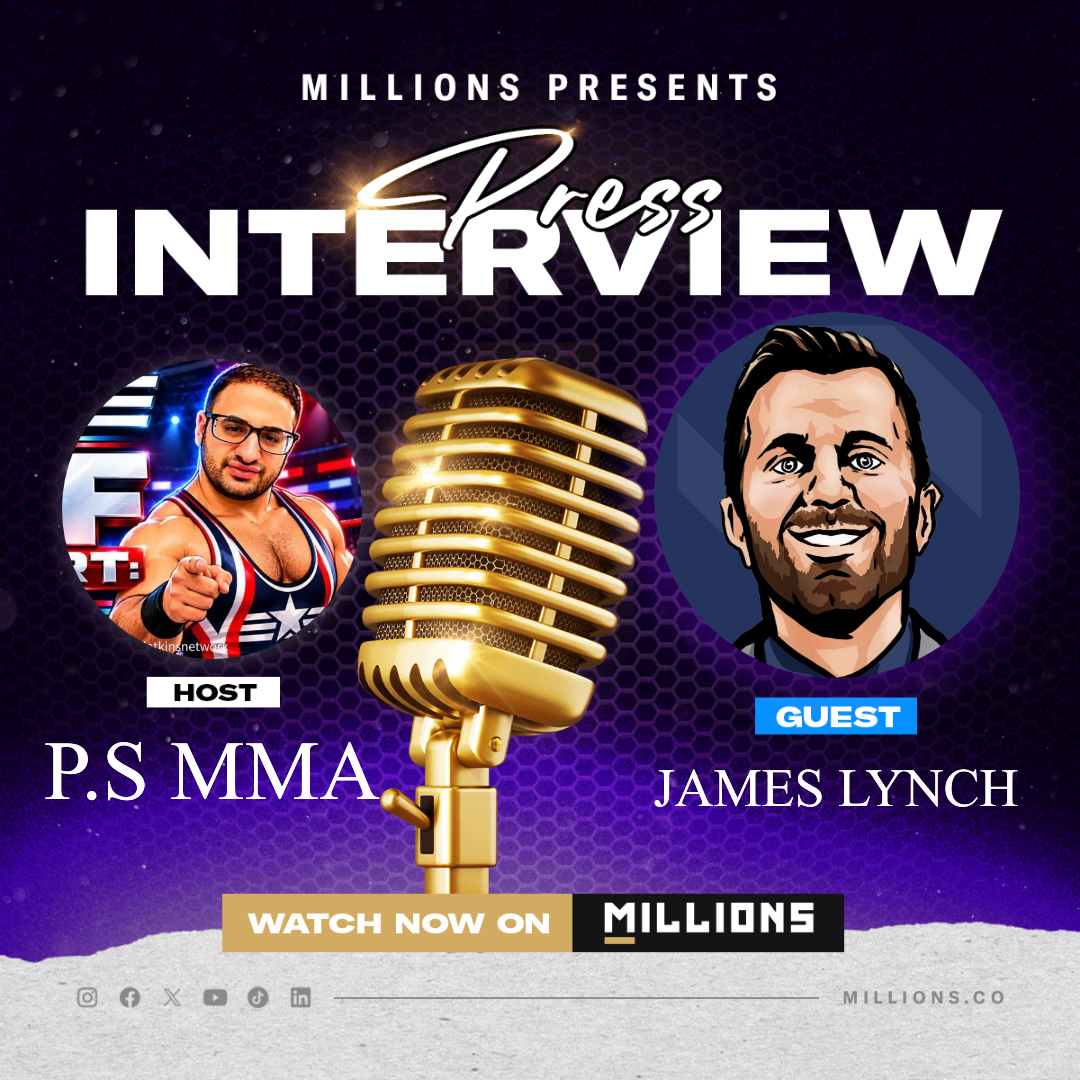
James Lynch P.S MMA interview on UFC access and journalism

Key takeaways
- James Lynch said a small media crew at UFC Edmonton let him ask Dana White the first question.
- Lynch believes some UFC matchmaking is too predictable and wants more competitive pairings.
- Lynch said PFL develops prospects and urged fans and journalists to follow MMA outside the UFC.
- Lynch supports his freelance career through interviews, event coverage, a podcast and work for multiple outlets.
- Lynch advised aspiring MMA journalists to start at regional shows, seek experienced feedback and develop versatile skills.
In the James Lynch P.S MMA interview, the Canadian journalist told P.S MMA why UFC Edmonton gave him better access than a crowded major card, why he thinks some UFC matchmaking is too predictable, and how work for Home Of Fight, Spectation Sports and other outlets supports his freelance career. He also made the case for covering Professional Fighters League fighters and regional MMA rather than concentrating only on the UFC.
Why did James Lynch get more access at UFC Edmonton?
James Lynch said UFC Edmonton’s small media crew let him ask the first question with Dana White, an opportunity that can be harder to get at a larger event. He enjoys covering fight-night cards because fewer reporters often means more time to ask fighters questions and a different experience at the press conferences.
A smaller media crew in Edmonton
Lynch recalled working alongside Jay Anderson of Cage Side Press, Shawnee Mack of Fullsen and Aaron Bronson of SportsNet. He said travel budgets and the names on a card can affect how many reporters attend. At Edmonton, the smaller turnout meant he did not have to wait behind a long line of outlets to speak.
Learning at regional events in Toronto
At bigger UFC cards, Lynch said, reporters can still get questions in, but outlets such as MMA Junkie and MMA Fighting may go first. He advised newcomers to cover Professional Fighters League or regional shows, where access can be easier. In Toronto, he covered shows associated with BTC Fight Promotions and Bellator before regularly covering UFC events. Those assignments gave him practice when few other media members were present.
How did James Lynch build his MMA journalism career?
James Lynch originally wanted to cover hockey, a sport he grew up playing. Watching The Ultimate Fighter drew him toward MMA, and an internship at Fight Network in Toronto gave him his first industry experience. He later combined freelance MMA work with an office job before moving into journalism full time after becoming a father in 2017.
Fight Network and a first UFC assignment
At Fight Network, Lynch learned from people including Mauro Ranallo, John Pollock and John Ramdeen. He later worked at TSN, where an opportunity to write about UFC for its website helped him obtain media credentials. His first UFC event as a media member was the first Jon Jones–Alexander Gustafsson fight in Toronto; he said his TSN assignment put him in the front row.
Lynch estimated that he has covered about 35 UFC events, though he said he would need to check the exact number. His earlier work also included Ontario regional shows and Bellator events in Canada. He described that progression as a way to build interviewing experience before taking on larger cards.
What did James Lynch say about PFL and MMA outside the UFC?
James Lynch said the Professional Fighters League has a strength in finding prospects and developing them as its own talent. He urged fans to look beyond the UFC, pointing to PFL, Rizin, KSW and Oktagon as promotions with fighters and audiences worth following. His own coverage ranges from major cards to regional events.
Prospects and international fan bases
Rather than relying mainly on former UFC fighters, Lynch said PFL has identified up-and-coming names. He also pointed to the international followings of Thad Jean and UFC fighter Joshua Van as examples of audiences that may be less obvious to North American viewers. In his view, promotions should pay attention to fighters whose support extends well beyond the market where a card takes place.
Tony Laramie and other fighters beyond the UFC
Lynch singled out Windsor flyweight Tony Laramie, saying the UFC missed an opportunity to sign him before he joined Rizin. He described Laramie as a fighter to watch in Japan and noted that his brother, TJ, fought in the UFC. Lynch also said he would like to see former Bellator welterweight Jason Jackson get a UFC opportunity, while acknowledging that Jackson’s age might affect the promotion’s interest.
Following all those promotions takes time. Lynch said he sometimes catches up on events the next morning around his children’s hockey commitments. He also covers regional fighters whose events appear on Spectation Sports, work he said he does almost as often as UFC interviews.
What did James Lynch say about UFC matchmaking?
James Lynch said the UFC has increasingly prioritized entertainment and finishes, and he believes some of its matchmaking has become too predictable. His complaint is not that every card lacks competitive fights: he argued that the promotion shows what it can do when it puts closely matched opponents together.
His concern about mismatched opponents
Lynch questioned the value of pairing established roster fighters with newcomers in bouts he views as lopsided. He cited Jacobe Smith’s matchup with a newcomer and Farid Basharat’s fight with John Garza as examples, asking what Basharat stood to gain beyond another win. These were Lynch’s assessments of the matchups, not claims that their outcomes were guaranteed.
He contrasted those pairings with a recent numbered card he thought had stronger matchmaking. Lynch wants more fights where both opponents appear to have a credible chance, rather than bouts with a heavy betting favorite.
Why international cards can look different
Discussing events in the Middle East and other markets, Lynch said promotions have business reasons to assemble cards for local audiences and viewing times. He suggested that expectations in those markets, along with the arrangements for staging events, help shape the UFC’s cards. He also noted that promotions can give fans a view of international talent by booking fighters with regional followings.
How does James Lynch make freelance MMA journalism work?
James Lynch said he is not a full-time employee of any one MMA outlet. Instead, interviews, event coverage, his own channel and a weekly podcast for several companies add up to his living. That arrangement lets him set much of his schedule, provided he completes the work each outlet needs.
He said he started with Home Of Fight in December 2024 and conducts interviews for its platform. He also named Fanatics View, Pub Sports, My MMA News and Spectation Sports among his clients, alongside other work. For MMAOddsbreaker, he produces The Gambler’s Perspective each week.
That mix explains why he may cover a regional event instead of a UFC card. Lynch said a Cage Titans assignment in Boston conflicted with a UFC event in Toronto, so he would honor the Cage Titans commitment. He described the separate jobs as small sources of income that collectively keep his freelance career going.
What advice did James Lynch give aspiring MMA journalists?
James Lynch advised aspiring journalists to start covering fights, seek specific feedback from people whose work they respect and learn skills beyond interviewing. He recommended regional and PFL events as places to gain experience and access before pursuing UFC credentials. He also urged newcomers to cover subjects that receive less attention.
Explaining why a range of skills matters, Lynch put his strongest advice plainly:
the more versatile you can be the more employable you'll be in this industry
He said he can write, edit his interviews and make graphics. For useful criticism, he suggested showing work to experienced people willing to help, rather than asking an undefined social-media audience whether an interview is good.
Lynch also encouraged coverage of women’s MMA and promotions outside the UFC, including PFL and ONE Championship. He told new interviewers not to dismiss amateur or lesser-known fighters: every assignment offers practice, and he said he approaches those conversations with the same seriousness as interviews with UFC champions.
His career advice was practical as well as encouraging. Lynch suggested keeping a full-time job while building journalism work on the side, then making the transition when that work can support it.
Who is James Lynch?
James Lynch is a Canadian mixed martial arts journalist and producer based near Vancouver. He covers MMA for Home Of Fight and Spectation Sports, produces The Gambler’s Perspective on MMAOddsbreaker and belongs to the Canadian Journalists Association.
Watch the full interview
Questions from the interview
What was James Lynch’s first UFC event as a reporter?
James Lynch said his first UFC event as a media member was the first Jon Jones–Alexander Gustafsson fight in Toronto. He was freelancing for TSN at the time.
When did James Lynch become a full-time MMA journalist?
James Lynch said he left his day job to work in MMA full time after becoming a father in 2017.
Does James Lynch work full time for Home Of Fight?
No. James Lynch said he freelances for Home Of Fight and several other outlets rather than working full time for any one company.
Why does James Lynch recommend covering regional MMA?
James Lynch said regional shows can give new journalists more access and more chances to ask questions. He believes those assignments help prepare reporters for UFC events.
Which MMA promotions does James Lynch think deserve more coverage?
James Lynch encouraged journalists to cover PFL, ONE Championship and other MMA outside the UFC. He also identified women’s MMA as an area that receives too little coverage.
In this interview

More from P.S MMA
News
News
News