
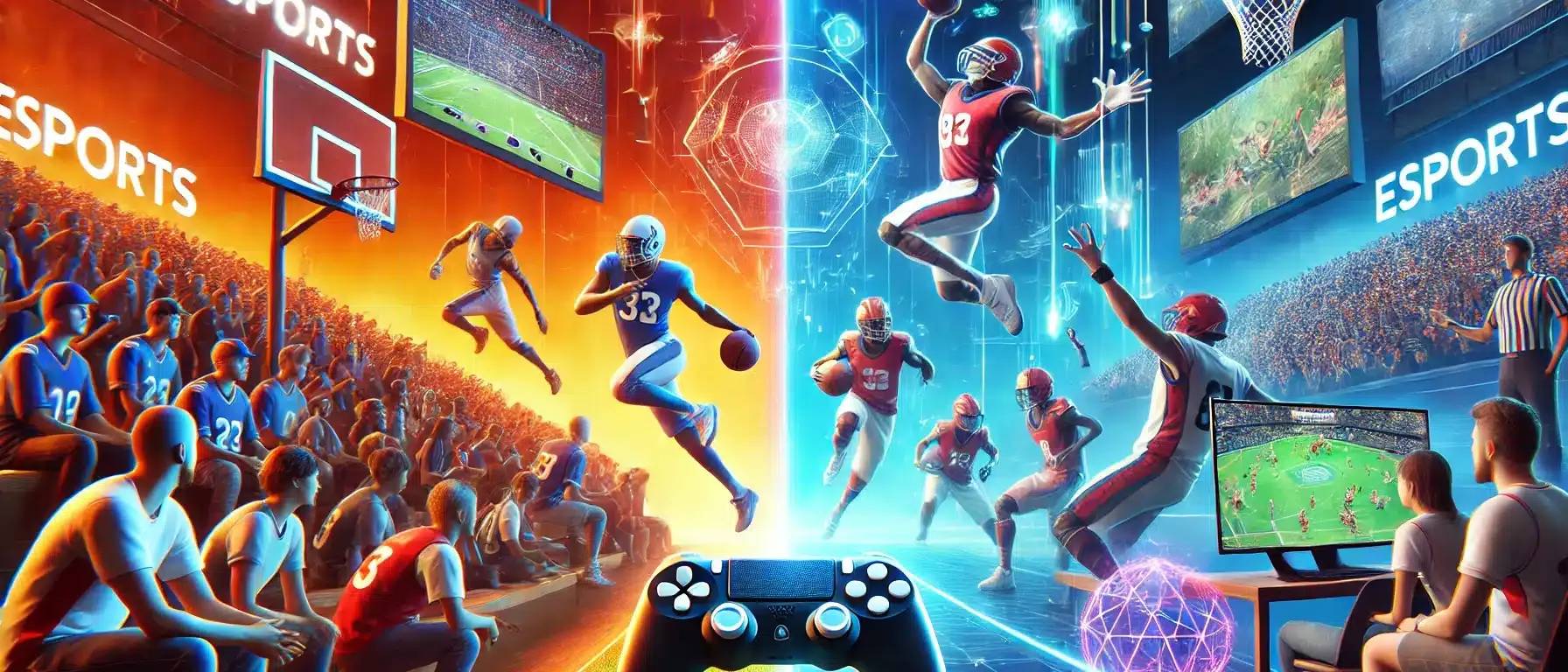
Esports vs Traditional Sports: A Clash of Generations and Screens

Over the past two decades, the world has witnessed a seismic shift in the nature of competitive entertainment. While traditional sports like football, basketball, and tennis have long been revered as cornerstones of global culture, a new challenger has emerged from the digital domain: esports. Competitive video gaming, once dismissed as a niche pastime, has grown into a multi-billion-dollar industry drawing millions of fans worldwide. As these two realms of competition coexist and sometimes collide, it's worth examining how they compare in terms of audience, investment, physicality, and cultural relevance.
Betting and Legal Considerations
Both esports and traditional sports are deeply entangled with the betting industry. However, esports presents unique challenges and opportunities. Traditional sports betting is heavily regulated and backed by decades of legal frameworks. Esports betting, while growing, is still navigating its regulatory landscape.
The use of bookmaker bonuses in esports has helped draw casual fans into the betting ecosystem, often targeting them through Twitch streams and gaming platforms. Still, the industry must grapple with concerns over match-fixing, underage betting, and transparency. Bodies like the Esports Integrity Commission (ESIC) are working to ensure fairness and ethical conduct.
Physicality vs Mental Agility
At the most fundamental level, traditional sports and esports differ in the nature of competition itself. Traditional sports demand physical exertion, athleticism, and stamina. Football players train relentlessly to improve their speed, strength, and coordination, while basketball players fine-tune their shooting and passing under intense physical pressure.
Esports, on the other hand, require a different type of mastery—mental sharpness, exceptional hand-eye coordination, and strategic depth. Games like Counter-Strike 2, Valorant, and StarCraft II demand fast reflexes, split-second decision-making, and the ability to execute complex strategies in real time. While not physically strenuous in the traditional sense, esports athletes can train for up to 10–12 hours a day to remain competitive, highlighting the cognitive and emotional demands of high-level play.
Audience Demographics and Reach
The global appeal of both esports and traditional sports is undeniable, but the demographics differ significantly. Traditional sports often attract a broad age range, with older generations maintaining long-term loyalty to teams and leagues. For instance, the average age of an NFL viewer is approximately 50 years old.
In contrast, esports captivate a younger, digitally-native audience. According to Newzoo, over 70% of esports viewers are under 35, and platforms like Twitch, YouTube Gaming, and Kick have become cultural hubs where fans interact, watch, and sometimes even compete. The accessibility of esports content—streamed for free and often featuring community interaction—makes it incredibly appealing to Gen Z and Millennials.
By 2025, the global esports audience was estimated to exceed 640 million people, with over 318 million classified as "esports enthusiasts". This puts esports in direct competition with traditional sports viewership, especially among younger generations who are more likely to watch League of Legends than the Super Bowl.
Revenue and Economic Growth
Economically, both industries are giants, but they differ in structure and scale. Traditional sports have long-established revenue streams, including ticket sales, broadcasting rights, sponsorships, and merchandising. For instance, the global sports industry is valued at over $170 billion, with the English Premier League alone generating more than $7.7 billion annually.
Esports, while newer, is growing rapidly. The global esports market was valued at approximately $1.6 billion in 2022, with projections to reach $3.5 billion by 2026. This growth is driven by sponsorships (accounting for nearly 60% of revenues), advertising, media rights, and merchandise. Tournaments like The International (Dota 2) offer prize pools exceeding $40 million, rivaling or even surpassing some traditional sports events.
Interestingly, many traditional sports franchises are now investing in esports teams, blurring the line between the two worlds. Organizations like Paris Saint-Germain and FC Schalke 04 have formed competitive teams in games like FIFA, League of Legends, and Rocket League.
Career Span and Athlete Health
Another point of divergence is the longevity of athletes. Traditional sports professionals often peak in their late 20s or early 30s, depending on the sport. Careers are typically limited by physical wear and tear, injuries, and aging.
Esports careers tend to peak earlier, with many top players retiring before 25. The reasons are multifaceted: the rapid evolution of game metas, the high-stress environment, and cognitive burnout. However, both industries are increasingly investing in athlete wellness programs, including mental health support, physical training, and structured breaks to prevent burnout.
Cultural Impact and Global Recognition
Sports have long played a role in shaping national identity, promoting unity, and fostering community. The World Cup, the Olympics, and Super Bowl Sunday are cultural institutions.
Esports, while newer, is forging its own cultural legacy. Events like League of Legends Worlds fill stadiums and attract more viewers than some traditional finals. In 2023, the LoL Worlds final drew over 6.4 million peak concurrent viewers, outpacing the NBA Finals and even the Stanley Cup.
Moreover, esports has become a legitimate career path, recognized by universities offering scholarships and governments granting visas to professional players. In 2022, esports was even featured as a demonstration event in the Asian Games, and is set to become a medal sport in future editions.
Conclusion: A Future of Coexistence
The debate of esports versus traditional sports is not about one replacing the other, but about how both can coexist and evolve. Traditional sports offer physical drama and history, while esports provides digital innovation and accessibility. Both capture the human spirit of competition and excellence.
As digital and physical arenas continue to overlap, fans will benefit from a richer, more inclusive landscape of competition. Ultimately, whether on a grassy field or a virtual battlefield, the thrill of the game remains universal.
About the athlete

More from MILLIONS

News

News

News