
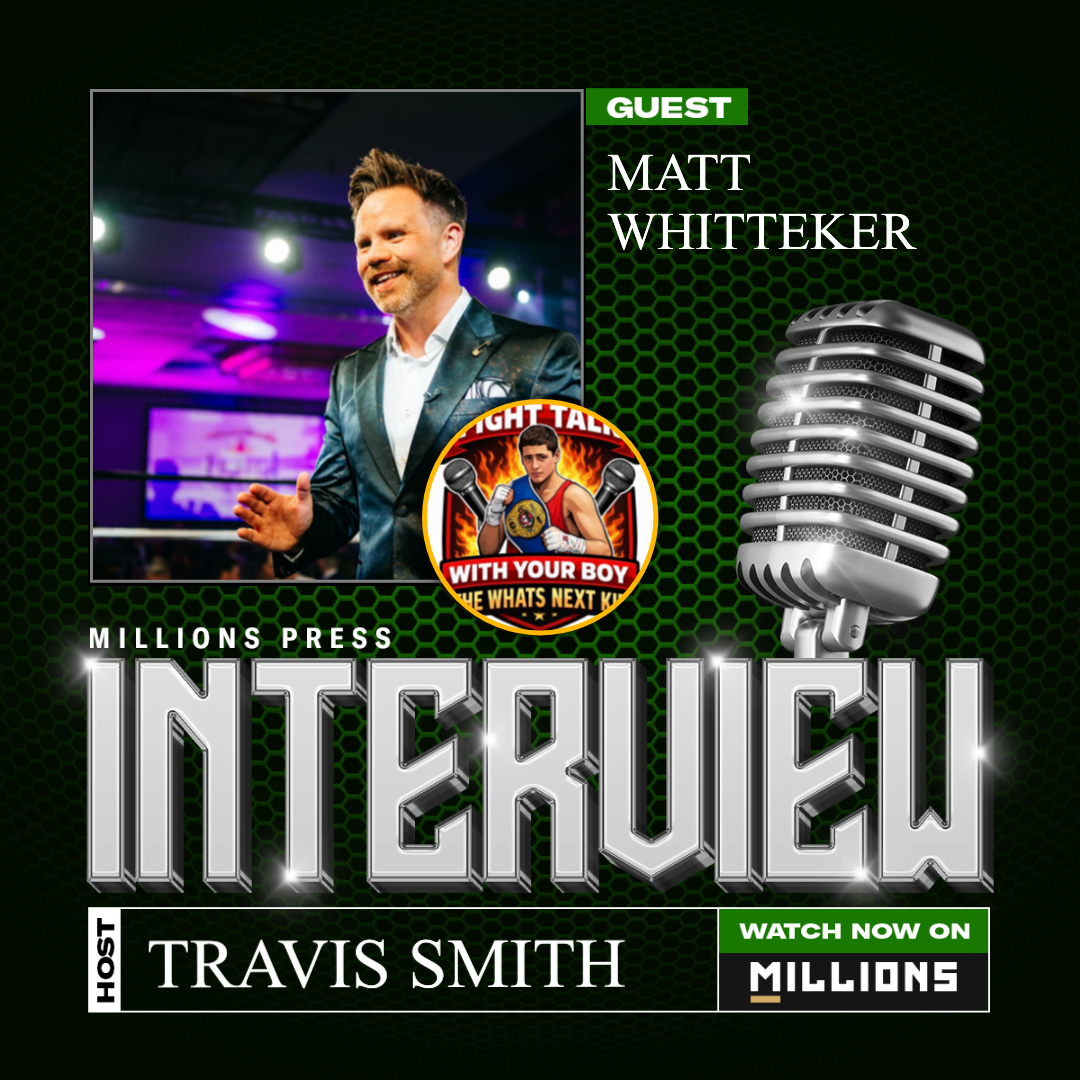
Matt Whitteker FIGHT TALK WITH YOUR BOY THE WHATS NEXT KID interview

Key takeaways
- Matt Whitteker praised the host’s interviewing skills and said the channel was growing.
- Whitteker said he wanted to stay in touch and talk again soon; he gave no date.
- Whitteker said he would keep tuning in to the host’s channel.
- Whitteker is the co-founder and CEO of MILLIONS and previously co-founded Fight For The Cure and Assent.
The Matt Whitteker FIGHT TALK WITH YOUR BOY THE WHATS NEXT KID interview covered new MILLIONS.co features, a possible third fight with Ryan O'Connor and why Whitteker thinks boxers need their own audiences. The platform's co-founder also discussed Danny Garcia becoming a shareholder, Floyd Mayweather's approach to promotion and the rise of women's boxing.
How did Matt Whitteker get into boxing and start running a gym?
Matt Whitteker took up boxing at about 16 or 17 after leaving hockey, the sport he had played throughout his childhood in Canada. Coaching boxing classes led him into the business side of the sport, and he later opened a gym in Ottawa with his brother and a friend.
From hockey to boxing
Whitteker said he was not good enough at hockey to pursue the junior route and wanted to work and save for a high school graduation trip. He took a job at Canadian Tire. His father had taken the family to amateur boxing shows, so boxing was already on his mind when he went looking for another sport. He liked that he could train without a team's fixed schedule.
He has had 18 amateur fights. One opponent was Ryan O'Connor, whom Whitteker remembers seeing on his first visit to a boxing club. They became friends, then fought in 2017, when Whitteker got the decision. O'Connor won their later rematch, leaving them one win apiece. Whitteker said a third fight could happen.
Coaching and opening a gym in Ottawa
At about 19 or 20, Whitteker began coaching at community centers for roughly $40 an hour, more than he had earned at Canadian Tire. People in his classes asked where they could train regularly, prompting him, his brother and a friend to open a gym. Whitteker was 22 and his brother was 18. For roughly the first two years, he said, membership and training revenue largely went to rent and utilities.
Why did Matt Whitteker start MILLIONS.co?
Matt Whitteker started MILLIONS.co to solve problems he and other people in boxing faced: streaming Fight For The Cure, selling pay-per-views and helping fighters sell merchandise. He said the idea took shape with his brother and a friend after earlier work in boxing and software.
Before MILLIONS.co, Whitteker worked on an app company called No Notes and co-founded Assent, a supply-chain data management company. He said he took no salary during Assent's first two years and relied on boxing work to pay his bills. Starting a company, in his experience, meant finding another way to cover expenses while the business grew.
For Fight For The Cure, he wanted a sports-focused service that made it straightforward to start a stream and sell access to it. He also saw professional boxer friends struggling to sell merchandise and saw an opportunity to put those tools alongside streaming and watch parties. Building the platform required an engineering team; Whitteker said the company later raised outside capital and built an internal team.
What did Matt Whitteker say about MILLIONS.co features and its creator program?
Matt Whitteker said MILLIONS.co had launched a pay-per-view affiliate program, with ticketing and an updated creator studio on its roadmap. He also said its content had become available on Apple TV. The creator program pays $500 a month for meeting its milestones, but he acknowledged that new users need clearer guidance.
Pay-per-view tools and Apple TV
The affiliate program lets a pay-per-view host set a payment for people who help sell streams or tickets; Whitteker gave $5 per sale as an example. He described separate options for event ticketing and streaming, alongside a more customizable creator studio. He said MILLIONS.co expected to carry 600 to 700 pay-per-views that year. These were the plans and estimates he gave at the time, not a report that every planned feature had since launched.
Creator payments and onboarding
Whitteker said the creator program was designed to make paid sports content work attainable for more people. Its interview milestones produce clips that MILLIONS.co can share with brands, which can then run sports influencer campaigns on the platform. He estimated that the effort required to meet the program's paid milestones worked out to roughly $25 to $35 an hour.
He was less satisfied with the first-time experience. A person downloading the app, he said, might not immediately understand how to enter the creator program or complete its milestones. Improving that onboarding was already in progress. He also said the team took requests for additions such as likes and comments on short clips.
What did Matt Whitteker say about Danny Garcia, Floyd Mayweather and athlete promotion?
Matt Whitteker pointed to a Danny Garcia fight streamed on MILLIONS.co as a defining business moment and said Garcia became a shareholder. He argued that athletes who create content and build audiences can sell more tickets and streams and gain negotiating power. To him, Floyd Mayweather showed both the value and a possible drawback of that approach.
Danny Garcia's Brooklyn fight
Garcia invited Whitteker to speak at a press conference for his Brooklyn fight, something Whitteker had not done before. The show streamed exclusively on MILLIONS.co, and seeing the platform featured throughout the venue made him feel the business had reached another level. He said Garcia also became a friend.
Building an audience and assessing Mayweather
Whitteker's case for posting interviews and other content was practical: promoters have to sell events, while athletes benefit when people follow their stories and buy their streams or tickets. He said that audience can also help an athlete move into work after sports. Whitteker put his view plainly:
every athlete should become their own media company
He praised Mayweather's ability to attract attention, including from people who wanted to see him lose, and to turn that attention into ticket, pay-per-view and merchandise sales. His reservation was the emphasis some fighters place on protecting an undefeated record, which he thought could prevent desirable fights. On promoters, Whitteker said their financial risk deserves compensation, while fighters are right to challenge bad conduct; a sound partnership has to work for both sides.
What did Matt Whitteker say about boxing belts and women's boxing?
Matt Whitteker said he values boxing's traditional belts but understands why Dana White and Zuffa would want to reduce bureaucracy around them. He was more emphatic about women's boxing: he praised Katie Taylor's fights and said MVP had done a strong job putting together women's cards.
The traditional belt system
Discussing a dispute over a championship belt, Whitteker agreed with the principle that a fighter should have to fight for a title rather than simply be given one. Still, after roughly 24 or 25 years around boxing, he said he felt some attachment to the traditional sanctioning system. He also understood the appeal of Zuffa's attempt to change parts of that system.
Katie Taylor and MVP
Whitteker said MVP's women's fights were generally well matched and entertaining. He cited Taylor and said women's bouts at Fight For The Cure were often highlights, with sustained exchanges particularly striking in some lower-weight fights. He also credited MVP's ambition and recalled how much work it took him and his brother to stage their first boxing show, an outdoor event called Fight Night at the Cabin.
What did Matt Whitteker say about Saudi-backed fights and Haney–Lomachenko?
Matt Whitteker wondered what would happen to major fights if Saudi-backed spending in boxing declined. Turning to Devin Haney and Vasiliy Lomachenko, he recalled a close fight that divided the people watching with him ringside and said he would have liked an immediate rematch.
The cost of staging major fights
Whitteker raised the question of whether top fighters would accept less money if spending on large events fell, and whether those fights would still happen. He did not claim to know the outcome. Earlier, he had described the costs promoters face before an event earns revenue, including a venue, a card and production, as well as the risk that a fighter cannot compete.
Haney, Lomachenko and Rival Boxing
Whitteker watched Haney–Lomachenko from a few rows back with his brother and friends. Their opinions on the close fight were split, he said, which made a rematch appealing to him. He also spoke warmly about Russ Amber, whom he identified as Lomachenko's cut man and the owner of Rival Boxing. Whitteker said he wears Rival gloves and that his former Ottawa gym had been one of the company's biggest customers for a couple of years.
Who is Matt Whitteker?
Matt Whitteker is the co-founder and CEO of MILLIONS.co. He previously co-founded Fight For The Cure, a charity boxing gala, and Assent. Assent exited to Blackstone and Vista PE for $1.3 billion.
Watch the full interview
Questions from the interview
Did Matt Whitteker agree to another interview?
Matt Whitteker said he wanted to talk with the host again soon, but he did not announce a date.
What did Matt Whitteker say about the host’s channel growth?
Matt Whitteker said the host’s channel was growing and that he liked following the host on social platforms.
What companies did Matt Whitteker co-found?
Matt Whitteker co-founded MILLIONS, Fight For The Cure and Assent. He is the CEO of MILLIONS.
In this interview
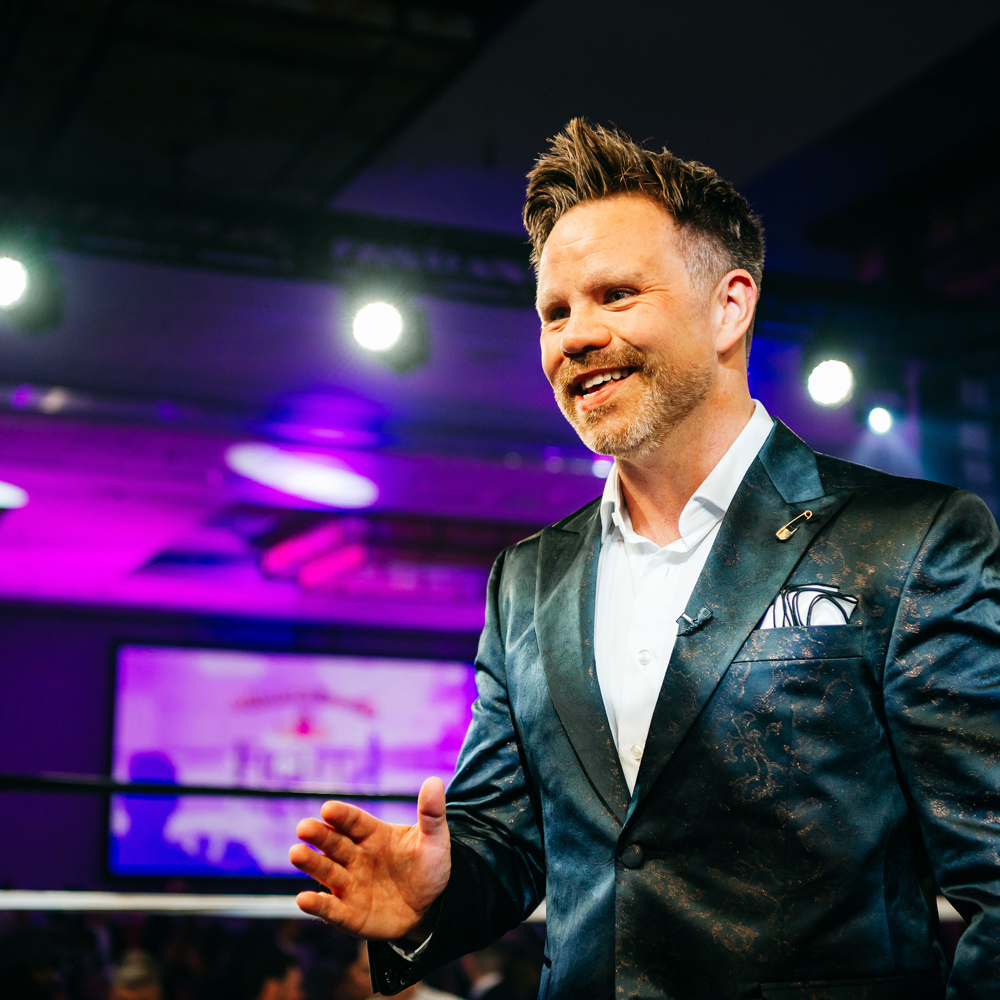

More from FIGHT TALK WITH YOUR BOY THE WHATS NEXT KID
News
Taylor Thompson FIGHT TALK WITH YOUR BOY THE...
FIGHT TALK WITH YOUR BOY THE WHATS NEXT KID
5 Nov 2026 at 12:28 AM
News
Cody “The Copperhead” Daniel on his November 21...
FIGHT TALK WITH YOUR BOY THE WHATS NEXT KID
4 Nov 2026 at 12:51 AM
News
Jasper Bourgette FIGHT TALK WITH YOUR BOY THE...
FIGHT TALK WITH YOUR BOY THE WHATS NEXT KID
3 Nov 2026 at 03:34 AM