
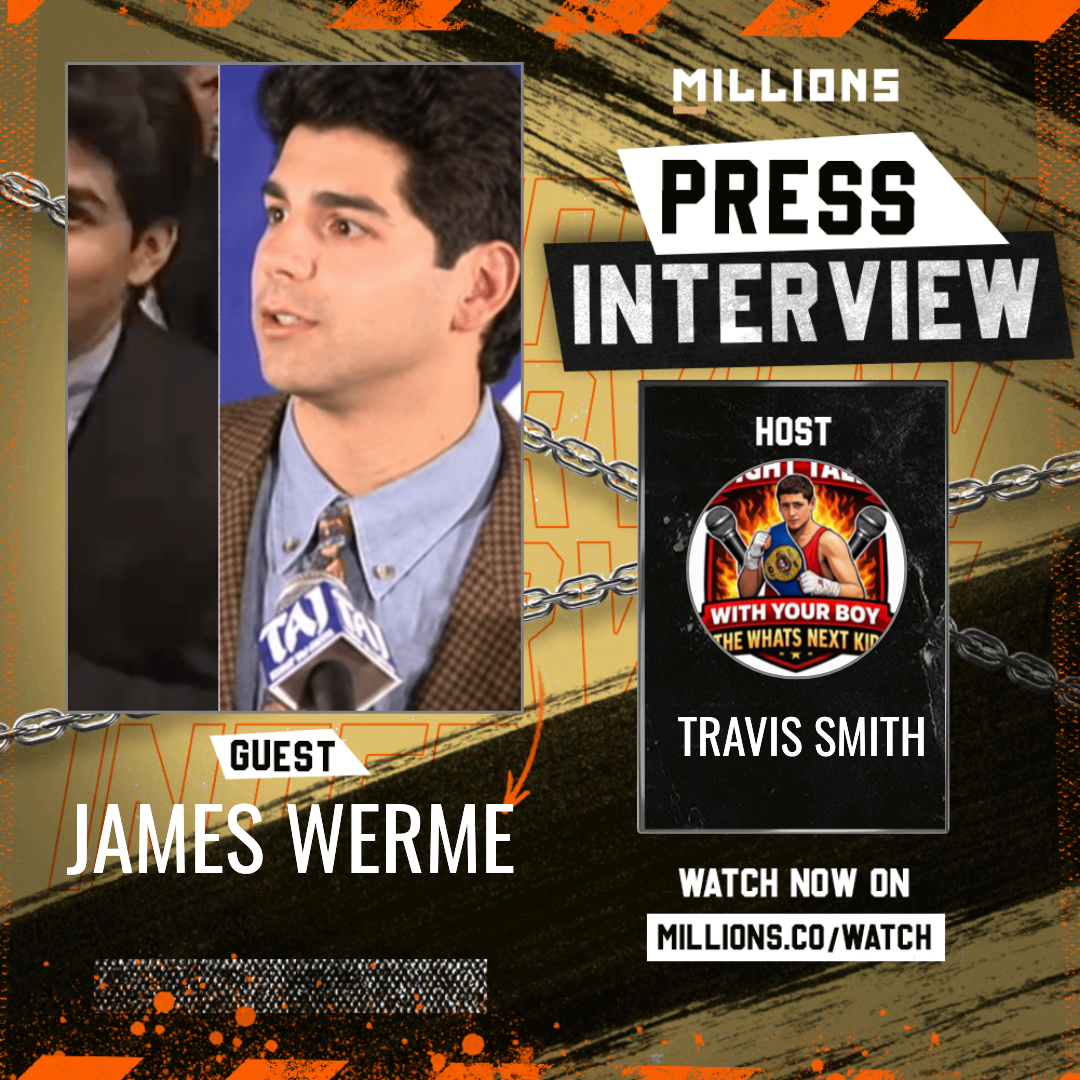
James Werme FIGHT TALK WITH YOUR BOY THE WHATS NEXT KID interview
Key takeaways
- James Werme said the UFC 12 crew moved the show from Niagara Falls to Dothan in roughly 24 hours and kept its pay-per-view start on schedule.
- Werme accepted responsibility for production decisions at UFC 33, where the pay-per-view window cut off the end of the main event.
- Werme said he was fired after UFC 35 following the UFC 33 error and disagreements with Dana White.
- Werme said Zuffa Boxing's distribution and spending give it an opening, though signing fighters and making fights remain difficult.
- Werme said large boxing purses could sharpen UFC fighters' concerns about their own pay.
The James Werme FIGHT TALK WITH YOUR BOY THE WHATS NEXT KID interview covers a UFC show moved across the country in 24 hours, the pay-per-view cutoff Werme says helped end his UFC career, and his view of Zuffa Boxing. Speaking with Travis, Werme recalled getting UFC 12 from Niagara Falls, New York, to Dothan, Alabama, taking responsibility for decisions at UFC 33, and watching Dana White enter boxing.
What did James Werme say about the UFC 12 relocation?
James Werme said relocating UFC 12 from Niagara Falls, New York, to Dothan, Alabama, in roughly 24 hours was the wildest event of his UFC tenure. He described it as a team effort that kept the show on schedule, and said he feared the UFC might have ended that night if the move had failed.
Keeping a backup venue in Dothan
Werme was handling live-event promotion in early 1997, about a year and a half after joining the UFC. He said the company routinely booked a backup building in case a venue fell through. When Semaphore Entertainment Group chief operating officer David Isaacs decided on the move late Thursday afternoon, Werme called the Dothan Civic Center to confirm it was available.
Isaacs then announced that the Friday show was moving, while Werme went to the venue in Niagara Falls to help rally the crew and dismantle a setup that was already largely in place. The job meant moving hundreds of people, the Octagon and the event equipment. Werme said the group rented airplanes, departed at midnight, landed at 4 a.m. and took buses for another two hours before heading to the building to set up.
The UFC 12 team effort
The show went out on time on pay-per-view, Werme said. He credited Isaacs, Elaine McCarthy, George Smith, Al Connell, Jason Cusden and then-owner Bob Meyrowitz among the people who made it happen. Werme described the move as both an extraordinary undertaking and one of his most rewarding experiences with the UFC.
Werme summed up why he stayed with the show:
We just couldn't let it die
That conviction predated UFC 12. Werme said the staff believed from his early days with the company that a real-fight television event could compete for attention with boxing and wrestling. They thought it could become big, although he said he did not know they expected it to become as big as it did.
What did James Werme say about Dana White and Zuffa's first UFC shows?
James Werme said he introduced Dana White as the UFC's new president on the first Zuffa-produced show in February 2001. Werme was the only employee who moved with the promotion from New York City to Las Vegas after the ownership change, becoming Zuffa's vice president of production and producing its first six shows.
Introducing Dana White at the Taj Mahal
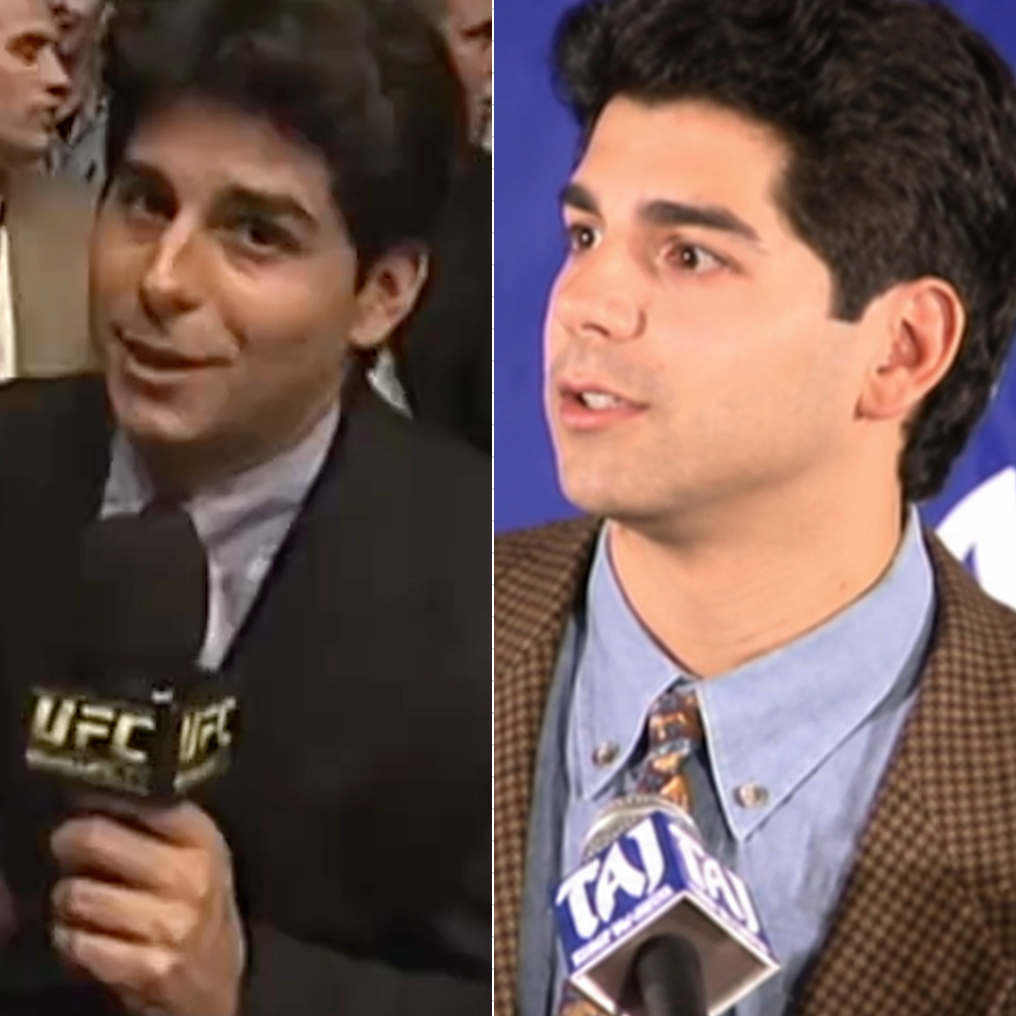
The introduction took place at the Taj Mahal, where Werme was doing post-fight interviews and roving reporting. He said the broadcast team wanted viewers to meet White and understand that the UFC had new owners. Werme recalled it as White's first on-camera appearance on a UFC show and said the clip still resurfaces when people look back at White's early years.
Werme said White, Lorenzo Fertitta and Frank Fertitta made him feel welcome during the transition. He remembered receiving housing at a Station Casinos property, a car and a meal card. Although his time with Zuffa ended badly, he described its first year as productive and said the new owners treated him well.
New venues, promotion and fighter features
That year included more shows at the Taj Mahal and an event at the Meadowlands that Werme said drew 12,000 to 13,000 people. He recalled a Carmen Electra photo shoot for advertising in Rolling Stone, Maxim and GQ, along with greater spending on fighter pay, marketing, promotion and fighter development. He also traveled to training camps to film features, including visits with Tito Ortiz in Huntington Beach and Randy Couture in Oregon.
Werme said the new owners restored cable distribution within their first six months and then opened the way for UFC events in Nevada. For him, the move from New Jersey shows to Las Vegas venues such as Mandalay Bay and the MGM was a significant part of that first year.
Why did James Werme leave the UFC after the UFC 33 pay-per-view cutoff?
James Werme said he was fired after UFC 35 in early 2002, following production mistakes and growing disagreements with Dana White. He identified UFC 33 as the turning point: the Las Vegas show overran its pay-per-view window, cutting off the final portion of the main event, and Werme says he failed to make a decision that could have protected the broadcast.
Werme said UFC 33 had a crowded format, including three title fights scheduled for five rounds. As the fights went the distance, he could have removed another part of the show and moved it to the end. Instead, he expected a quick finish to recover the time and did not want to disrupt the flow of the production. The main event's last round and a half was cut off for pay-per-view viewers.
He called that outcome inexcusable and accepted responsibility for his decisions. Werme said the team also examined whether matchmaking had contributed to the timing problem, but the broadcast error affected his own focus. He remained employed through UFC 35, yet said he and White increasingly clashed over decisions that included matchmaking and budgets.
The dismissal came at an 8 a.m. staff meeting after Werme had returned from celebrating his 30th birthday with friends and family in New York. He said he had become impatient and too vocal with his new bosses. Looking back, he described himself as burned out after six or seven years of working through the UFC's political, distribution and business struggles.
What did James Werme remember about interviewing UFC fighters?
James Werme said his on-air interviews felt natural because he already knew many of the fighters through his production work. He recalled a close-knit atmosphere around recurring fighters and camps, but said one of his hardest broadcast assignments was telling viewers that a main event had been canceled after Kevin Randleman slipped backstage.
Werme began appearing on camera in 1999, conducting post-fight interviews and working as a roving reporter. He named Frank Shamrock, Tito Ortiz, Randleman, Mark Coleman and Bas Rutten among the fighters he interviewed. Time together outside the arena, he said, helped establish the familiarity viewers could see on camera.
His executive role also shaped what he asked and emphasized. Werme said the UFC was regularly trying to establish its credibility as an athletic event amid opposition from politicians and others in the industry. Speaking to fighters gave him a way to bring attention to the athletes while making those points to the television audience.
What did James Werme say about Zuffa Boxing and its rivals?
James Werme said Dana White's move into boxing did not surprise him because White and the Fertitta brothers were boxing fans when he worked with them. He sees Zuffa Boxing's distribution deal and willingness to spend on talent as advantages, but said building a promotion and securing fights remain difficult.
Werme recalled Lorenzo Fertitta describing boxing as the professional sport his family went to see while growing up in Las Vegas. He also remembered the owners discussing boxing during their early UFC years. White's forceful approach to entering the market, Werme said, fits the public style he developed over decades of success, though the White he knew in 2001 was still learning his new job.
Fighters, promoters and television distribution
Asked about Shakur Stevenson, Werme said he did not know the details of Stevenson's arrangement or why he appeared able to leave without fighting for the promotion. He expects sought-after fighters to weigh competing offers rather than assume they will choose Zuffa Boxing. He also viewed the pursuit of Conor Benn as a possible signal to rivals, including Eddie Hearn, that the new promoter was prepared to spend on recognizable names and major fights. Those were Werme's interpretations, not claims of knowledge about the contracts.
Distribution may be the clearest early advantage, in Werme's view. He said a television or streaming outlet is essential to getting fights in front of an audience, and pointed to TKO's Paramount relationship and Most Valuable Promotions' Netflix relationship as examples. A deal provides access to viewers, he said, but a promoter still has to put together fights and sign boxers people want to watch.
What did James Werme say about UFC fighter pay and boxing purses?
James Werme said established boxers can command purses that make the contrast with UFC fighter pay difficult to ignore. He argued that the UFC has been able to control its purses more tightly, while a successful Zuffa Boxing signing could raise uncomfortable questions for MMA fighters who helped build the UFC's value.
The discussion turned to what a UFC champion might think on seeing a boxer receive a much larger offer. Werme did not confirm the payment figure raised in the question. Instead, he said top-level boxing operates on a different pay scale and that its biggest main events cannot simply be priced according to the UFC's model.
He also said the UFC's Paramount arrangement, without a pay-per-view component, could make those comparisons more pointed for fighters. In his view, the difference between boxing and MMA purses stands out even though MMA generates substantial television-rights and other revenue. More promotions and distribution outlets could create opportunities for fighters and fans, but Werme expects pay to remain a contentious part of that growth.
Who is James Werme?
James Werme worked on 40 UFC events from 1995 to 2002, becoming a lead executive and producer from 1998 to 2001 and an on-air announcer from 1999 to 2001. He was the only employee to work for both Semaphore Entertainment Group and Zuffa, producing Zuffa's first six UFC shows as vice president of production. He also worked for the World Wrestling Federation in 1995.
Watch the full interview
Questions from the interview
How quickly did James Werme move UFC 12 to Dothan?
James Werme said the UFC 12 team relocated the event from Niagara Falls, New York, to Dothan, Alabama, in roughly 24 hours. He said the show started on time on pay-per-view.
Was James Werme fired immediately after UFC 33?
No. James Werme said UFC 33 was a turning point, but he was fired after UFC 35 in early 2002.
What went wrong with the UFC 33 broadcast?
UFC 33 exceeded its pay-per-view window, and the last round and a half of the main event was cut off for viewers. James Werme said he should have changed the show's running order when earlier fights consumed too much time.
Did James Werme introduce Dana White on a UFC broadcast?
Yes. James Werme said he introduced Dana White as the UFC's new president on Zuffa's first show in February 2001.
Did James Werme confirm Conor Benn's Zuffa Boxing purse?
No. James Werme discussed how a large boxing purse could affect UFC fighters' views of their own pay, but he did not confirm the payment figure raised during the interview.
How many UFC shows did James Werme work on?
James Werme worked on 40 UFC shows between 1995 and 2002, including Zuffa's first six shows as vice president of production.
In this interview

More from FIGHT TALK WITH YOUR BOY THE WHATS NEXT KID
News
Matt Whitteker FIGHT TALK WITH YOUR BOY THE WHATS...
FIGHT TALK WITH YOUR BOY THE WHATS NEXT KID
19 Oct 2026 at 11:58 PM

News
Enoch FIGHT TALK WITH YOUR BOY THE WHATS NEXT KID...
FIGHT TALK WITH YOUR BOY THE WHATS NEXT KID
19 Oct 2026 at 10:41 PM
News
Lauren Oslar FIGHT TALK WITH YOUR BOY THE WHATS...
FIGHT TALK WITH YOUR BOY THE WHATS NEXT KID
18 Oct 2026 at 12:09 AM