
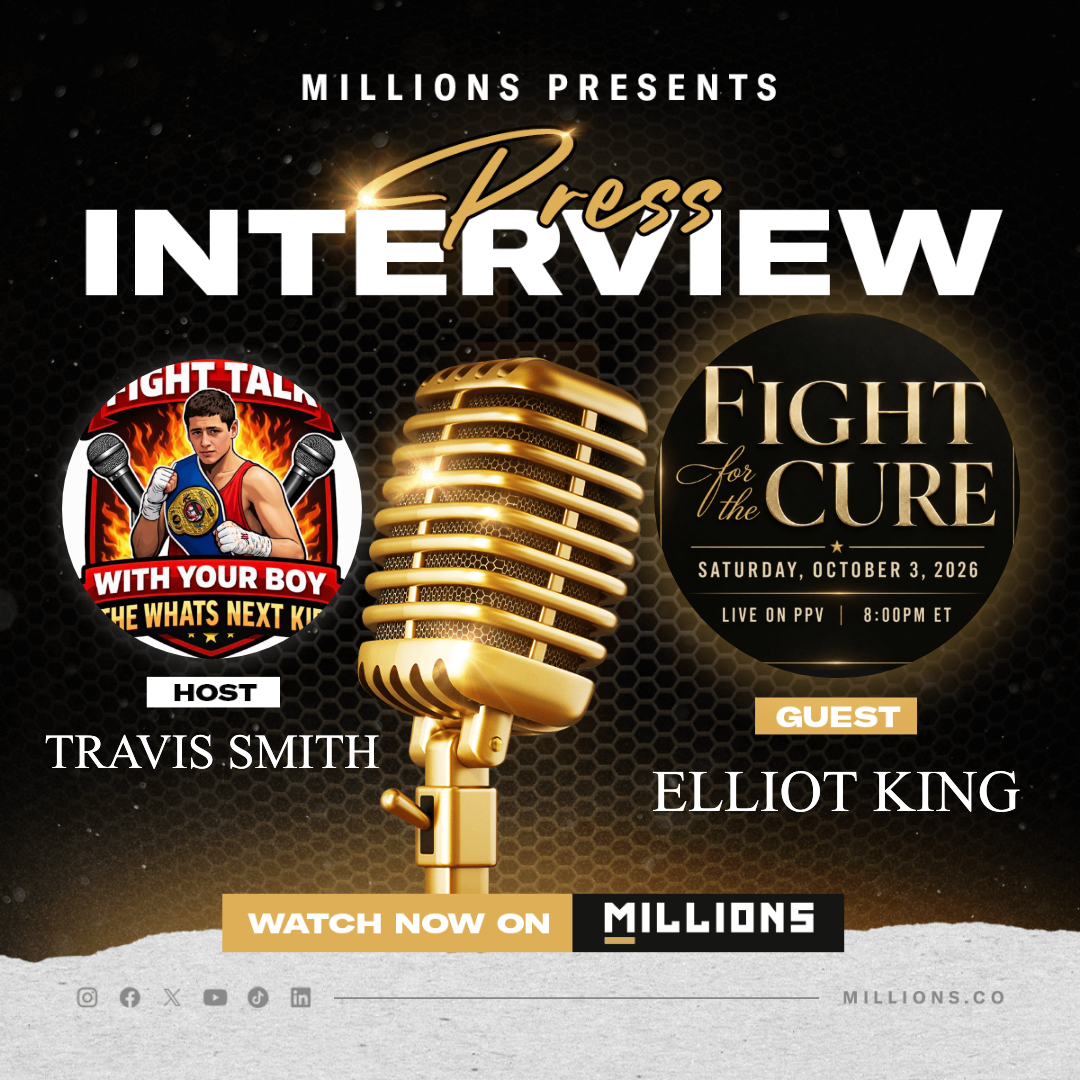
Fight for the Cure Raises $1.7 Million for Cancer Research
Key takeaways
- The Fight for the Cure representative said its most recent Ottawa gala raised $1.7 million for cancer research or clinical trials.
- Fight for the Cure began 18 years ago at a boxing gym owned by the representative and his brother Matt; its first event raised about $500.
- First-time Fight for the Cure boxers train for roughly eight months before competing.
- The representative said he leads MILLIONS’ pay-per-view department and helps partners distribute event clips.
- He said Sonya Lamonakis has put up weekly events with MILLIONS for about four years.
Heart and Crown and Inflector Environmental Presents Fight for the Cure FIGHT TALK WITH YOUR BOY THE WHATS NEXT KID interview covered an Ottawa charity boxing gala that raised $1.7 million for cancer research or clinical trials at its most recent event. The Fight for the Cure representative also explained why its first-time fighters train for eight months, and how his work leading MILLIONS’ pay-per-view department helps boxing events and their athletes reach viewers.
How did Fight for the Cure grow from an Ottawa gym event into a major fundraiser?
Fight for the Cure began 18 years ago, when the representative and his brother Matt owned a boxing gym in Ottawa and decided to run a large amateur event. They raised about $500 in the first year. At the most recent gala, he said, the total reached $1.7 million for cancer research or clinical trials in his hometown.
Starting the event with Matt
He was 20 when they started, and Matt was about 23. Both were boxing fans: despite growing up in Canada, he said he would struggle to name ten hockey players but could name leading fighters across boxing’s weight classes. Running an amateur show grew out of the gym they already owned and their interest in the sport.
The $1.7 million fundraising night
The change in scale took 18 years. Describing the latest result, he put the contrast with that first $500 event plainly:
We just raised 1.7 million for cancer research or clinical trials in my hometown
He said the years of work made it feel as though the event had arrived as a charity boxing gala. Its purpose remained local: supporting people affected by cancer through fighters willing to train and fundraise before stepping into the ring.
Why do Fight for the Cure’s charity boxers train for eight months?
Fight for the Cure asks its first-time participants to train for eight months so their bouts become credible contests as well as a fundraising attraction. The representative said the event initially featured mostly amateur boxers from the community, but the crowd’s response to a white-collar main event convinced the organizers to include more first-time fighters.
He acknowledged that some boxing followers look down on white-collar bouts. His answer was the preparation: participants train for their fights over roughly eight months, rather than treating the gala as a one-night novelty. He said they develop into solid beginners during that time.
He did not present the bouts as elite boxing. Instead, he argued that the standard is not far below what a fan might see at a local club show, especially considering that many participants are entering their first fight. For the crowd, that combination of preparation and a first-time test is part of the appeal.
How does the Fight for the Cure representative say MILLIONS supports creators?
The Fight for the Cure representative said MILLIONS aims to give sports creators direct support and production tools rather than simply a place to upload videos. He identified clipping tools, overlays and sponsorship opportunities as ways the platform tries to help creators build an audience alongside its boxing and other combat-sports coverage.
Building a sports-focused platform
He and his brother wanted to start a sports company because of their interest in boxing. Meeting Bruce Buffer, whose work is associated with MMA, helped them establish a foothold in that sport; their existing boxing connections made combat sports the natural starting point. He contrasted MILLIONS’ approach with publishing on large platforms such as YouTube, TikTok and Kick, where he felt a new creator would receive less direct help.
Using creator feedback
For him, support also means changing the product when creators identify a need. Discussing the ability to speak with a guest before going live, he said that feature was not always available. When the team hears the same request repeatedly, he said, its developers work to build it.
He described a curated space for sports content as another part of the pitch. That is his view of what MILLIONS should offer, not a claim that creators cannot succeed on YouTube, Instagram, TikTok, X or other platforms.
What does the Fight for the Cure representative do with pay-per-view boxing on MILLIONS?
The representative said he leads MILLIONS’ pay-per-view department and works with event partners to help their broadcasts succeed. He also wants notable action from those shows to remain visible afterward: the team clips events, posts highlights on the platform, and shares them with athletes and promotions.
Highlights and clips for creators
Watching live events and weekend highlights, he said, made him think more people should see the fights, knockouts and back-and-forth exchanges. MILLIONS therefore puts event clips back on its platform. He also said its interview-clipping tools are available without a separate charge, contrasting that with creators who pay outside teams to make clips.
USA Boxing Metro and Sonya Lamonakis
Asked about amateur bouts streamed through USA Boxing Metro, he described that organization as an early part of the pay-per-view business. He said Sonya Lamonakis tried MILLIONS after becoming dissatisfied with her previous streaming arrangement and has continued putting up weekly events for about four years.
He also pointed to coverage of the Florida Golden Gloves as an example of why recording amateur fights matters. A boxer who wins a championship, he argued, should be able to watch the performance afterward in a broadcast presentation. That access was especially relevant to the host, who described wanting to rewatch and share his own bouts.
What did the Fight for the Cure representative say about amateur boxing experience?
The representative said a first amateur bout teaches lessons that gym work cannot fully provide, particularly how to handle the wait and pressure before fighting. He told FIGHT TALK WITH YOUR BOY THE WHATS NEXT KID that the improvement from a first fight to a second can be substantial because the boxer knows what the event feels like.
The host discussed training in Florida, earlier jab work with a coach in New York, and hopes to compete while still an amateur. The representative asked how the host would find bouts through his current setup and encouraged him to fight regularly at 17. He also said he was 40 and no longer intended to fight.
They then discussed a boxer the host had interviewed who entered a professional debut without an amateur fight. The representative agreed that experience matters: on a debut, waiting for the bout can leave someone drained before entering the ring. By a second fight, he said, a boxer can be more comfortable and better able to carry out a plan.
What did the Fight for the Cure representative say about boxing broadcasts and Ryan Rozicki?
The representative preferred boxing broadcasts that move promptly between fights, citing MVP and Zuffa cards as examples he felt maintained a quicker pace. The conversation later turned to cruiserweight Ryan Rozicki, whom he enjoys watching and would like to see matched with the fighter the host raised, Noel Mikaelian.
Waiting between fights
Discussing MVP production, he said long gaps can make a card exhausting to watch, particularly late at night. He objected to waiting around 40 minutes while commentators discuss an upcoming fight and said he would rather get to the action. The host, who had attended MVP and Matchroom events, also described how late a fight night and its post-fight press conference could run.
Ryan Rozicki and Noel Mikaelian
When the host raised a dispute over how a WBC belt was awarded after Mikaelian’s loss, the representative called his argument fair. He then brought up Rozicki, saying the Canadian had called for a Mikaelian fight for a long time. According to him, they had once been scheduled to meet, but an injury to Mikaelian prevented it.
He thought the matchup could still be entertaining. He described Mikaelian as a more tactical boxer who keeps his distance, while Rozicki’s aggressive style is why he enjoys watching him. His interest in Rozicki was personal, too: he said he backed him because he is Canadian.
What is Fight for the Cure?
Fight for the Cure is an Ottawa charity boxing gala that brings business and community leaders into the ring to support people affected by cancer. First-time fighters spend months training and fundraising before competing in front of a crowd.
Watch the full interview
Questions from the interview
How much did Fight for the Cure raise at its most recent event?
The Fight for the Cure representative said its most recent Ottawa event raised $1.7 million for cancer research or clinical trials.
How much did Fight for the Cure raise in its first year?
Fight for the Cure raised about $500 in its first year, according to the representative who started it with his brother Matt.
How long do Fight for the Cure participants train?
Fight for the Cure participants train for about eight months before their charity boxing bouts.
Does MILLIONS charge creators for interview clips?
The Fight for the Cure representative said MILLIONS makes interview clips for creators without charging them separately for that service.
How long has Sonya Lamonakis streamed events with MILLIONS?
The Fight for the Cure representative said Sonya Lamonakis has put up weekly events with MILLIONS for about four years.
Were Ryan Rozicki and Noel Mikaelian scheduled to fight?
The Fight for the Cure representative said Ryan Rozicki and Noel Mikaelian were scheduled to fight once, but Mikaelian was injured and the bout did not happen.
In this interview
More from FIGHT TALK WITH YOUR BOY THE WHATS NEXT KID
News
Sampson Tabbytite mma on Toledo, Longoria and...
FIGHT TALK WITH YOUR BOY THE WHATS NEXT KID
7 Oct 2026 at 02:02 AM
News
Dedrick “Yung Hitta” Crocklem Interview on His...
FIGHT TALK WITH YOUR BOY THE WHATS NEXT KID
7 Oct 2026 at 01:10 AM
News
Jacob preedom next fight against Hunter at 165...
FIGHT TALK WITH YOUR BOY THE WHATS NEXT KID
6 Oct 2026 at 11:42 PM