
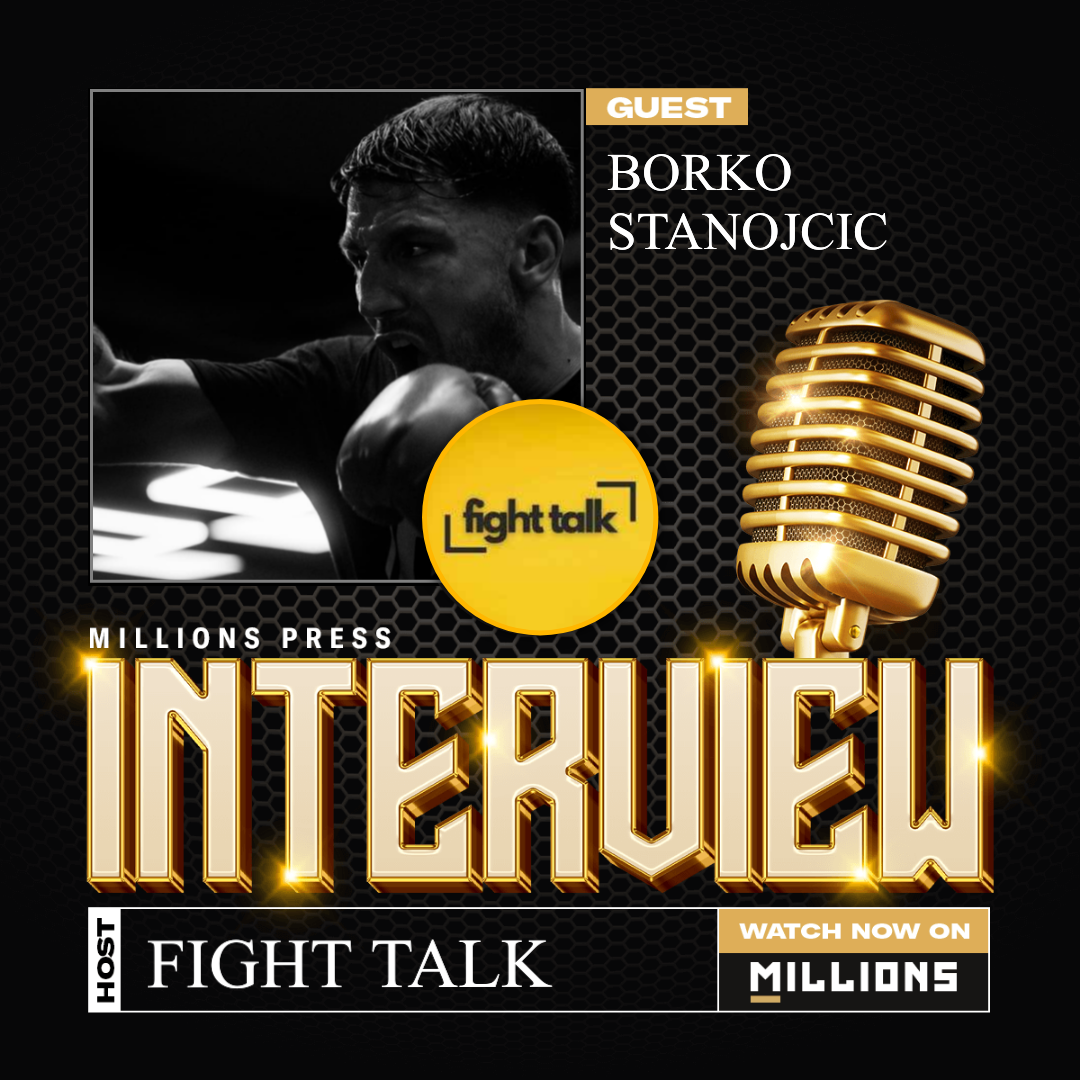
Borko Stanojcic FightTalk.mt interview on WAKO Pro title

Key takeaways
- Borko Stanojcic considers his WAKO Pro Mediterranean title fight in Malta his biggest opportunity yet.
- Stanojcic is training twice a day at Warrior Gym in Serbia for the title fight.
- Stanojcic said training helped him stop drinking and going out and brought more discipline to his life.
- Stanojcic prefers K1 and said he does not plan to compete in Muay Thai again.
- Stanojcic works full time and pays for his own training and camps.
Borko Stanojcic FightTalk.mt interview with Ali Storm covered the title fight he considers his biggest opportunity yet: a WAKO Pro Mediterranean Championship bout in Malta. Stanojcic is training twice a day in Serbia to prepare. He also explained how fighting helped him stop drinking and going out, and why he does not plan to compete in Muay Thai again.
Why does Borko Stanojcic’s next fight mean more than his earlier titles?
Borko Stanojcic considers his WAKO Pro Mediterranean title fight his most significant opportunity so far. Although he already has K1 and Muay Thai titles, he described this bout as a step beyond his previous championships and said its scale has made him take preparation especially seriously.
The WAKO Pro opportunity in Malta
Stanojcic is set to fight for the title on November 27 at Muay Thai GP 2 in Malta. His earlier titles include the KGP K1 Pro European Championship, Rage Combat K1 Pro Championship and Gladiators Promotions Malta White Eye Championship. He called KGP big, but said the WAKO Pro opportunity gave him a stronger feeling than winning his first title.
Twice-daily training at Warrior Gym in Serbia
For this fight, Stanojcic went to Warrior Gym in Serbia, where he trains twice a day. He described a demanding environment with Glory fighters, boxing champions and around 20 professional fighters regularly in the gym. Spending nearly three weeks there, he said, leaves him feeling ready to face anyone. Seeing fighters he once watched on television training beside him pushes him to work harder.
How did fighting change Borko Stanojcic’s life?
Borko Stanojcic said serious training helped him leave behind a period of drinking and going out. What began as a way to change his routine became a lasting commitment, and he credits fighting with bringing more discipline to his work and a calmer direction to his life.
Starting again after his 23rd birthday
Stanojcic had previously trained in kung fu while living in Serbia, but he described a later period when he felt he was wasting time. Around his 23rd birthday, he decided to start training to stop drinking and going out. He began with two sessions in one week, increased to three the next and reached five in the third. He said he has kept training for the last four or five years.
That commitment changed more than his schedule. He said he became more disciplined at work and felt proud of having achieved something. Stanojcic put the change in his own words:
without fighting I was like just lost like wasting life around and now I feel that I'm living the life
His first win and an enduring fighting style
Stanojcic recalled hearing that he had won an early fight as one of the happiest moments of his life, even though he remembers little of the fight itself. His approach from those early days remains recognizable: he wants to move forward and apply pressure. He said he has improved and adjusted that style without abandoning its main focus.
Why does Borko Stanojcic prefer K1 to Muay Thai?
Borko Stanojcic prefers competing in K1 and does not plan to fight in Muay Thai again. He enjoys watching skilled Muay Thai fighters, but said his own bouts relied too much on a K1 approach and that he does not feel comfortable using the full range of Muay Thai techniques.
Stanojcic said he did not use many kicks, elbows or other techniques he associates with Muay Thai in his fights. Rather than continue competing in a discipline he feels he cannot perform properly, he chose to focus on the ruleset that suits him. He framed that decision as respect for Muay Thai, not a lack of interest in watching it.
He sees knowing where he is comfortable as part of making sound decisions about his career. K1 allows him to pursue the forward-moving style he has used since his first fight while continuing to improve it.
How does Borko Stanojcic handle champions, nerves and losses?
Borko Stanojcic said an opponent’s championship status does not change how he prepares: he intends to get ready the same way and impose his own game. He also accepts nerves and defeats as part of fighting, relying on his coaches for guidance and treating losses as reasons to improve.
Facing another champion
His upcoming opponent is also a champion, but Stanojcic said the distinction carries little weight for him. He thinks a fighter from Malta might know more about his local reputation than someone arriving from abroad. Either way, he wants to make the opponent respond to his approach rather than build his entire plan around theirs. He said a coach had studied the opponent and pointed out things to watch for.
A broken nose in a semifinal
Stanojcic recalled a Niska world semifinal against an opponent he said had 250 fights. The opponent broke his nose, but Stanojcic said he did not dwell on the defeat. He views losses as a normal part of competing and as a prompt to train harder and improve small details. Before fights, he said, one of his coaches knows what to tell him to bring his attention back to the task.
What does Borko Stanojcic sacrifice to keep fighting?
Borko Stanojcic works full time while paying for training and camps himself. His routine can mean waking at five to sprint before work, then going straight to training afterward. He acknowledged the physical and financial costs, but said his enjoyment of fighting keeps him committed.
He described days organized around training, work and rest, with little time left for himself. Stanojcic said he has injured his elbow and broken his nose, while earning no money from the effort he puts into fighting. Even a difficult sparring session can make him question whether the sacrifices are worthwhile; a good session often restores his motivation.
Fighting also shapes his free time. When he is not competing, he travels to watch bouts, including Glory events. He spoke of his girlfriend, his gym and the people who help arrange opportunities. Stanojcic specifically credited Kelvin with finding fights and handling arrangements, saying that support matters alongside the work a fighter does in the gym.
What does the WAKO Pro Mediterranean Championship mean to Borko Stanojcic?
Borko Stanojcic said he once would not have believed he could fight for a WAKO Pro title in Malta. The announcement of his Mediterranean Championship bout moved him, and he described representing Malta on that stage as an honor and a major moment in his career.
When Kevin first raised the possibility, Stanojcic thought it could not happen. He was on his way to training when he saw the fight announcement and said he nearly cried. The opportunity stands out to him not only because of the title, but because it is taking place in Malta.
His Serbia camp reflects that reaction. Stanojcic said Warrior Gym is a place to train hard, not to joke around, and the level of the fighters around him makes him push himself. He has not personally studied his opponent, though a coach has shared points to watch. His first aim remains to make his own approach work and adjust during the fight if necessary.
What does success mean to Borko Stanojcic outside the ring?
Borko Stanojcic measures success partly by being recognized for good things he has done and leaving a name behind. That view connects the titles he is pursuing with the personal change he described: he wants to keep building a life that feels purposeful, not simply collect another belt.
Asked what he would tell his younger self, Stanojcic’s answer was to begin training earlier, stop drinking and take the work seriously. His advice reflects the path he described from gradually adding training sessions to organizing much of his life around the sport.
He still describes himself as a regular person with a full-time job. Fighting, however, remains central even outside a camp: if he is not preparing for a bout, he is often planning a trip to watch one. For Stanojcic, recognition matters because it marks work he believes has changed him for the better.
Watch the full interview
Questions from the interview
When is Borko Stanojcic’s next fight?
Borko Stanojcic said he is scheduled to fight for the WAKO Pro Mediterranean title on November 27 at Muay Thai GP 2 in Malta.
Where is Borko Stanojcic training for his WAKO Pro fight?
Borko Stanojcic is training twice a day at Warrior Gym in Serbia for his WAKO Pro Mediterranean title fight.
Will Borko Stanojcic fight in Muay Thai again?
Borko Stanojcic said he does not plan to compete in Muay Thai again. He prefers fighting in K1, although he enjoys watching skilled Muay Thai fighters.
What happened to Borko Stanojcic in the Niska world semifinal?
Borko Stanojcic said an opponent with 250 fights broke his nose in a Niska world semifinal. He said he treated the loss as a reason to keep improving.
Does Borko Stanojcic have a full-time job?
Borko Stanojcic said he works full time while training, and pays for his own training and camps.
In this interview


More from FightTalk.mt

News

News

News