
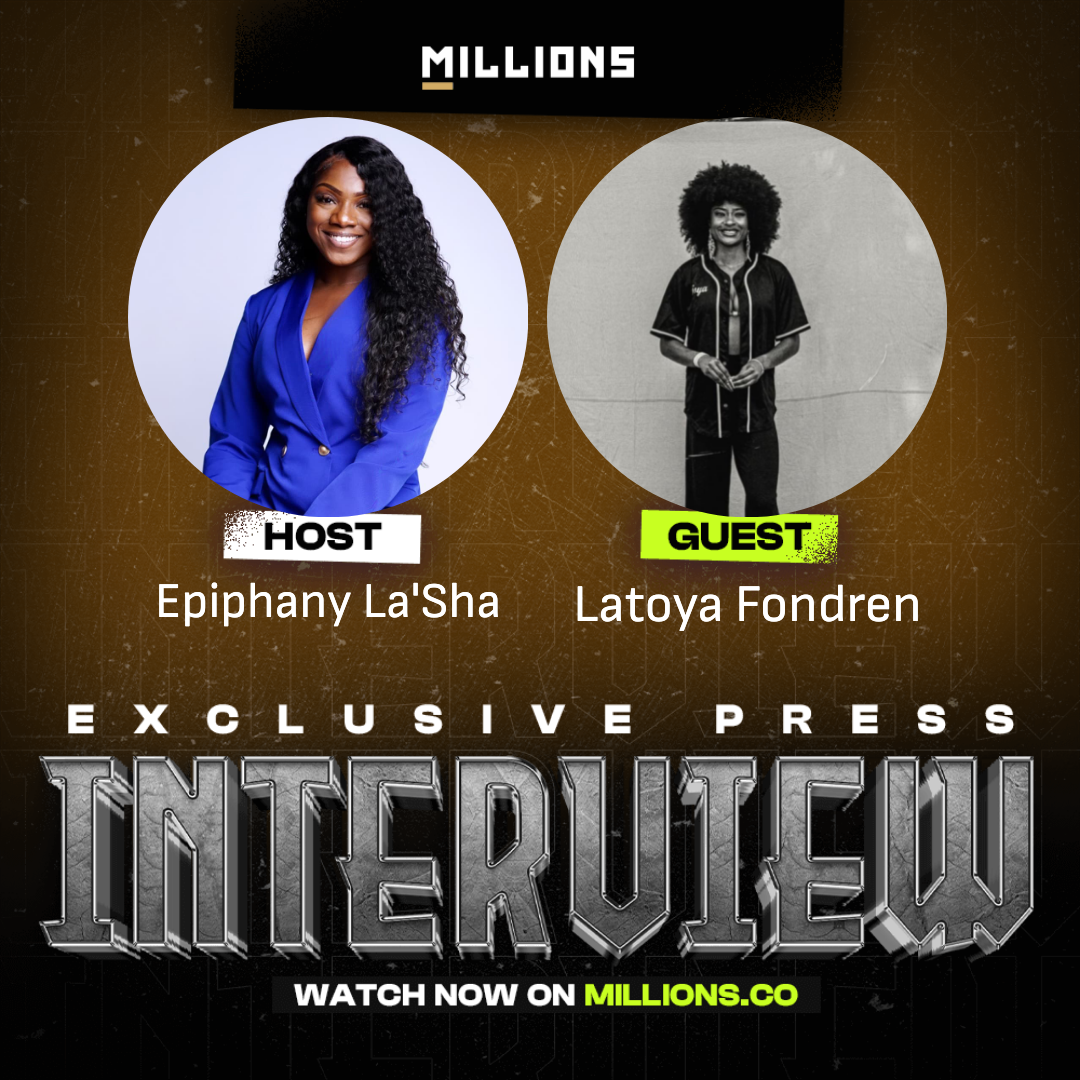
Latoya Fondren Epiphany La’Sha interview on her bodybuilding pro card
Key takeaways
- Latoya Fondren earned a bodybuilding pro card at her third show after winning her first two powerlifting competitions.
- Fondren said she began her fitness journey in her 30s and became a pro athlete in roughly three years.
- Fondren prefers powerlifting to bodybuilding because of its community, encouragement and energy.
- Fondren said her competition preparation includes coaching, nutrition, recovery and mental preparation.
- Fondren runs a marketing side business and published the poetry book There’s Beauty in the Struggle.
The Latoya Fondren Epiphany La’Sha interview on MILLIONS covered how Fondren won her first two powerlifting competitions, earned a bodybuilding pro card at her third show and built a life around more than lifting. She also told La’Sha why powerlifting remains her first love and how she uses storytelling to encourage others.
What did Latoya Fondren say about natural hair and her work in Dallas?
Latoya Fondren said embracing her natural hair became part of learning to appreciate herself. Outside powerlifting and bodybuilding, the Chicago native lives in Dallas, works in marketing and runs a side business that helps small-business owners tell their stories.
Learning from Mama Fondren
Fondren said her hair had always been dense, but it flourished after she moved away from perms. Mama Fondren had embraced natural hair before it became a broader movement and encouraged her daughter to do the same. In high school, Fondren preferred hair that was slick and flat. As she grew older, she became comfortable wearing it big and appreciating what she had.
Marketing and telling stories online
Through a fine creative studio, Fondren helps small-business owners communicate what they do when running the business leaves little time for social media. She also makes fitness and encouragement videos of her own. A football video drew widespread attention online, although she readily admitted that she is still learning the game.
Fondren described storytelling as a way to share both her fitness journey and lessons from ordinary days. Sometimes an idea comes to her after the gym, and she records it while still sweaty because she thinks someone else may need to hear it.
How did Latoya Fondren’s fitness journey lead to a bodybuilding pro card?
Latoya Fondren began her fitness journey in her 30s, won her first two powerlifting competitions and earned a bodybuilding pro card at her third bodybuilding show. She said the progression took roughly three years and made her recognize herself as an athlete for the first time.
Leaving Miss Linda’s track team
Fondren did not play basketball or run track as people sometimes assume. During her freshman year of high school in Chicago, her computer teacher and track coach, Miss Linda, persuaded her to join the team. After the first practice, Fondren was so sore that she quit. She remembers wishing now that she had stayed with it.
Finding powerlifting
Years later, a former partner tried to teach Fondren exercises such as squats. She said she joked too much to take the free lessons seriously, so he suggested finding a trainer she did not know. She found baby Jesus training through Instagram, spoke with Sam at the gym and began training there while working a nine-to-five job.
About a year into that training, Fondren discovered powerlifting. She won her first competition, entered another less than six months later and won that one too. Being under the bar at the first meet was the moment she realized she was an athlete.
Taking the bodybuilding stage with Keisha
After about a year in powerlifting, Fondren took a break because she felt worn down by heavy lifting. Bodybuilding had interested her since her teens, so she began working with Keisha and learned how differently its training and nutrition worked. Fondren won her second bodybuilding competition, then received her pro card at her third show, which she said was on September 5. The card means she can compete for money.
Why does Latoya Fondren keep training despite soreness?
Latoya Fondren said soreness no longer makes her want to stop, as it did when she quit high school track. At 33, she thinks about the mobility and independence she wants later in life, and that long-term goal helps her continue training on difficult days.
Fondren wants to be able to sit down and stand up comfortably, use stairs and, if she has grandchildren, pick them up. She would also like the option of running a marathon when she is 60 or 70. Those possibilities matter more to her than avoiding every uncomfortable workout now.
She stressed that starting later is still possible. Her point was that taking care of herself while she can make training part of her routine may improve her quality of life as she ages.
Why does Latoya Fondren prefer powerlifting to bodybuilding?
Latoya Fondren values both sports, but powerlifting is her first love because of its community and energy. She described people urging lifters through an attempt at a competition and said the direct feeling of lifting a weight she once could not lift sets the sport apart for her.
Fondren recalled the satisfaction of progressing from a 150-pound deadlift to 300 pounds. Strangers at meets encouraged her, while people at the gym sometimes looked surprised to see her lifting heavy in a pink outfit with long nails, chalk on her hands and calluses from training.
She has found a community in bodybuilding too, but described its pace as slower. Powerlifting gives her a different kind of excitement, both during competitions and through the people she has met outside them.
How does Latoya Fondren prepare for a powerlifting competition?
Latoya Fondren prepares with a coach, a strength-training plan, adequate food, recovery and attention to her schedule and mental state. She said one of her powerlifting plans lasted about 13 weeks, with training designed to help her reach a personal best on competition day.
Fondren recommends a knowledgeable coach, particularly for a first meet, because competitions have rules and standards a new lifter needs to understand. She said nutrition still matters in powerlifting: even when her food choices are less restrictive than in bodybuilding, she needs enough calories to lift and recover.
Recovery between heavy sessions
When working with a powerlifting coach, Fondren tried to get a massage every two weeks when possible. She also emphasized stretching, managing gym time, moving on days off and communicating with her coach. Preparation has to fit around work and the money, time and effort the sport requires.
Fondren said she manages anxiety in part by making the process enjoyable. Mental preparation, for her, means tuning out discouraging voices without losing the fun of training.
What does Latoya Fondren say about women lifting heavy weights?
Latoya Fondren rejects the idea that a woman should avoid heavy lifting or change her appearance to be accepted as strong. She said women can train hard while choosing for themselves how to dress, wear their hair and express femininity.
Fondren has heard the assumption that lifting heavy will make a woman look like a man, or that a woman should not lift as much as a man. She sees no reason to accept those limits. Her gym shoes, heels, makeup, natural hair and callused hands are all parts of the same person.
Fondren put her view plainly:
you can still be soft and you can still get your hands dirty with calluses in the gym as well
What legacy does Latoya Fondren want to leave?
Latoya Fondren wants to be remembered as someone who did not give up and who encouraged other people even during her own difficult times. She connected that hope to There’s Beauty in the Struggle, her book of short poems about lessons learned by the end of her 20s.
Fondren said the title reflects her belief that hardship and purpose can coexist. She wants people to keep going through their own challenges, just as she continues to show up while facing hers. Authenticity matters to her whether she is at work, at home, in the gym or eating at Cava.
She also welcomes people reaching out through Instagram or TikTok to collaborate or train together. Fondren made clear that she is not a personal trainer; she is willing to share an exercise she knows and learn alongside someone when she does not know it.
Watch the full interview
Questions from the interview
How many powerlifting competitions did Latoya Fondren win?
Latoya Fondren said she won her first two powerlifting competitions. She entered the second less than six months after the first.
At which bodybuilding show did Latoya Fondren earn her pro card?
Latoya Fondren earned her bodybuilding pro card at her third show, which she said took place on September 5.
Who coached Latoya Fondren in bodybuilding?
Latoya Fondren said she worked with Keisha when she moved from powerlifting into bodybuilding.
How long was Latoya Fondren’s powerlifting preparation plan?
Latoya Fondren said one of her powerlifting preparation plans lasted about 13 weeks.
What is Latoya Fondren’s book called?
Latoya Fondren’s book is called There’s Beauty in the Struggle. It contains short poems and lessons she learned through the end of her 20s.
In this interview

More from Epiphany La’Sha
News