
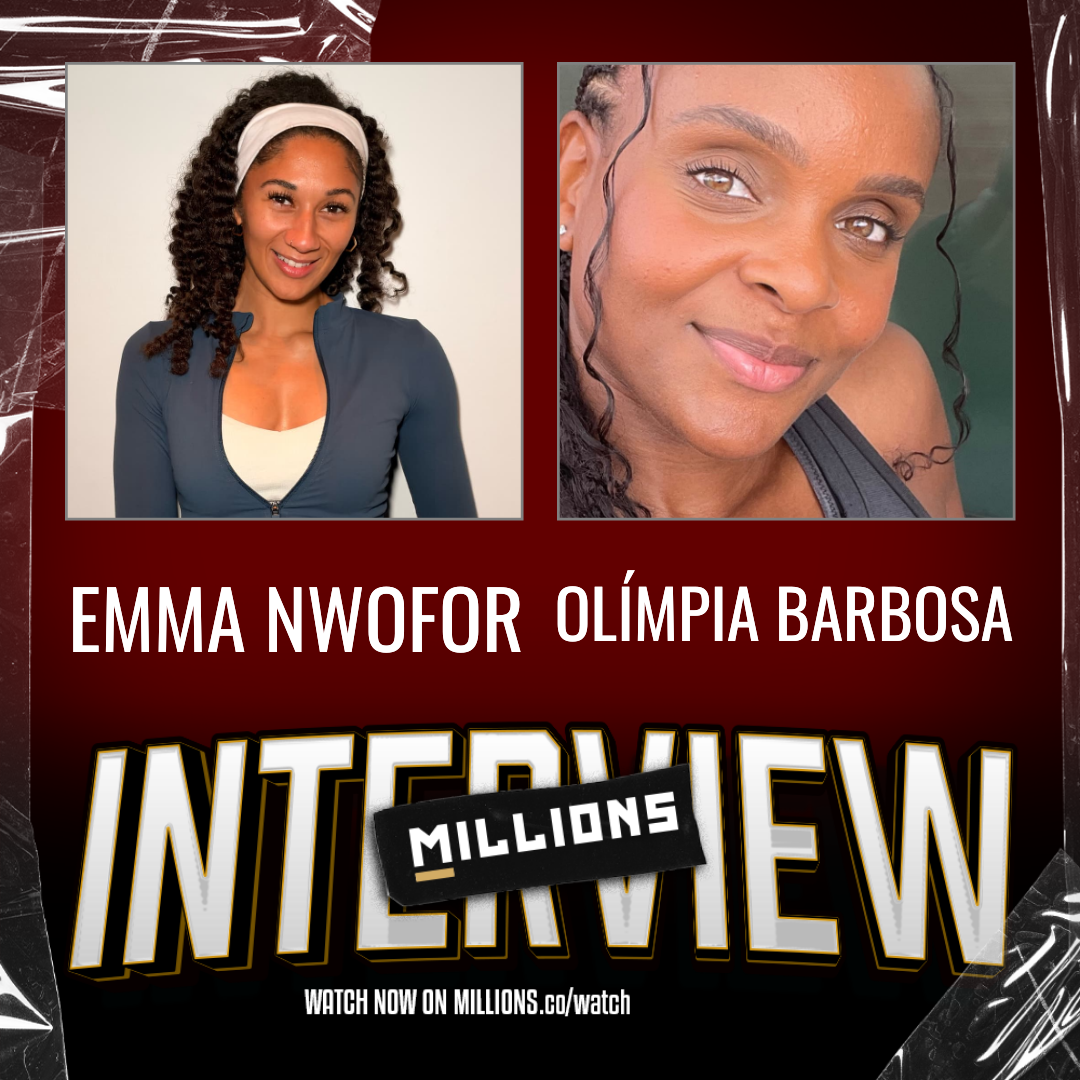
Olímpia Barbosa Emma Nwofor interview on injury and sub-13 goal

Key takeaways
- Olímpia Barbosa said a hamstring tendon tear kept her out of the outdoor season and made her consider quitting athletics.
- Barbosa wants to become the first Portuguese hurdler to run the 100-meter hurdles in under 13 seconds.
- Barbosa trains rescue dogs as a firefighter and said the job has helped her remain an athlete through injuries.
- Barbosa said representing Portugal matters especially because she trains while earning a living as a firefighter.
- Barbosa named her father, an Olympic sprinter, as her biggest inspiration in athletics.
In the Olímpia Barbosa Emma Nwofor interview on The Check-In, the Portuguese hurdler told Emma Nwofor that a hamstring tendon tear kept her out of the outdoor season and made her consider quitting. Barbosa has decided to try again, with a goal of becoming the first Portuguese hurdler to run under 13 seconds. She also explained how she trains while working as a firefighter with rescue dogs.
How does Olímpia Barbosa balance rescue-dog work and hurdling?
Olímpia Barbosa said balancing athletics with firefighting is not easy, though her current assignment differs from responding to fires. She works in a canine brigade, training rescue dogs that search for missing people after events such as building collapses and earthquakes. The daily challenge is training the dogs and being present for that work while continuing her own training.
Barbosa does not describe the canine role as a way around the demands of firefighting. She has to keep the dogs prepared even when there is no search operation, and she still has to make time for hurdles. She sees being able to do both as an achievement in its own right.
She said firefighting has also given her the resilience to keep training through injuries. In her view, the two careers reinforce each other, even though maintaining them together is difficult.
How did Olímpia Barbosa’s father lead her to the hurdles?
Olímpia Barbosa said her father, an Olympic sprinter, was her biggest inspiration in athletics. She remembers training with him when she was about 13 or 14 and hearing him urge her to keep going. Hurdles became her event only after she had tried several disciplines and found that she enjoyed them.
As a young athlete, Barbosa tried javelin and shot put during a period of trying the heptathlon, though she said she did not pursue the combined event seriously. She also tried long jump, triple jump and the 800 meters. Her coach encouraged her to give hurdles a chance, and she felt it went well.
She played Soccer, handball and basketball too. Basketball was her favorite of those team sports, and she said joining a team felt straightforward because she started young and approached it with an open mind. Trying different events and sports mattered to her: she believes young athletes have to try something to find out whether they like it.
What did representing Portugal mean to Olímpia Barbosa?
Olímpia Barbosa called representing Portugal one of the biggest achievements of an athlete’s career. For her, reaching international events showed that she could work as a firefighter and still train hard enough to meet demanding qualification standards. She said simply making it to those competitions was a significant accomplishment.
Emma Nwofor brought up Barbosa’s appearances at European events and in relays, including the European Cup, European Athletics Indoors and European Athletics Outdoors. Asked for a favorite championship memory, Barbosa did not choose a particular race. She returned instead to the difficulty of qualifying and the feeling of being there for Portugal.
Barbosa said she believes she might have achieved more athletic goals if she could have focused solely on sport. In Portugal, she explained, being only an athlete is not easy for everyone; she has had to earn a living alongside training. That makes each opportunity to represent her country particularly important to her.
What did Olímpia Barbosa say about competing in France and Spain?
Olímpia Barbosa named France as her favorite country in which to compete, citing its meetings and the welcome she has received there. She also said language barriers can make competitions harder to navigate. Spain stood out in that discussion because she has sometimes struggled to make herself understood there despite the similarities between Portuguese and Spanish.
Meetings in France
Barbosa likes the range of meetings in France and described people there as welcoming. That positive experience does not mean communication is effortless everywhere she travels: she said some places make it difficult to use English when an athlete needs to ask a question or arrange something at a competition.
Speaking Portuguese and Spanish
In Spain, Barbosa said she can sometimes understand what someone says in Spanish but finds that her own Portuguese is not understood in return. She then tries to speak Spanish. Her point was practical rather than about a result on the track: being able to communicate can shape the experience of competing abroad.
Why did Olímpia Barbosa become a firefighter?
Olímpia Barbosa did not grow up planning to become a firefighter; as a child, she wanted to be a flight attendant. She later became interested in helping people and serving her community, and took an opportunity to join the fire service. She said she has been a firefighter for eight years, including about three working with rescue dogs.
Before joining the canine brigade, she responded to fires, car crashes and other calls. She described the physical and mental demands of that work as considerable. Her shifts have included 24 hours on duty followed by 72 hours off, a pattern that can feel very different depending on whether a shift brings floods and heavy rain or little time outside the station.
Firefighter training and other roles
Barbosa recalled that her one-year firefighter training group had 145 people, only four of them women. She said 139 people completed the training and all four women were among them. The service also offers specialties beyond firefighting at a station, she explained, including car-crash response, wildfires, diving, hazardous materials and rescue-dog work.
Asked whether the job had made her stronger as an athlete, Barbosa connected its mental demands to her ability to continue through training and injuries. She put that connection plainly:
I think I'm still an athlete because of firefighting because it's not easy.
She encouraged people considering firefighting to think about a career beyond sport. Athletic careers end, she said, while a job can provide an income and a future.
What spikes and music does Olímpia Barbosa use for training?
Olímpia Barbosa said she was trying Adidas Avanti spikes in training to see whether they felt more comfortable. She had not settled on them as a competition choice. She also listens to upbeat music before racing, drawing from Portuguese rap and hip-hop, American popular music and African music rather than following one fixed playlist.
Her interest in different spikes comes with a concern about ankle stability. Barbosa said some spikes require an athlete to work hard to feel stable, so she wanted to give the Adidas Avanti a try and judge them for herself. She had noticed other hurdlers using them, but did not claim to know yet whether they were right for her.
Music serves a simpler purpose: she wants something fun that helps her get in the mood to race, not something calm. She said her taste spans several genres and that she does not rely on one particular kind of song.
What is Olímpia Barbosa’s goal after her hamstring injury?
Olímpia Barbosa said a hamstring tendon injury that she described as a 70 percent tear kept her out of the outdoor season. After setting a personal best in 2025, she considered quitting when the injury interrupted her progress. She chose to continue and wants to become the first Portuguese hurdler to run under 13 seconds.
Returning to training without pain
Barbosa said the injury happened in February, without giving a year. Her immediate priority is to train without pain and return to full training before judging how her body responds in competition. She wants another personal best, but first needs to find out how racing feels after the layoff.
The sub-13-second target
Her 2025 personal best had followed what she described as three years of trying to train, making the setback especially hard to take. Love for the sport persuaded her to give it another try. She believes the sub-13-second goal is possible and is working toward it.
Barbosa also identified a mental change she wants to make. She said she can hold back rather than commit fully when racing over hurdles, and sees changing that approach as part of pursuing her target. For now, the goal is clear, but she is taking the return one training session and competition at a time.
Watch the full interview
Questions from the interview
Did Olímpia Barbosa consider quitting athletics?
Yes. Olímpia Barbosa said she thought about quitting after a hamstring tendon injury interrupted her return from a 2025 personal best, but decided to try again because she loves the sport.
How severe was Olímpia Barbosa’s hamstring injury?
Olímpia Barbosa described her hamstring tendon as 70 percent torn. She said the injury kept her out of the outdoor season.
What time does Olímpia Barbosa want to run in the 100-meter hurdles?
Olímpia Barbosa wants to run under 13 seconds and become the first Portuguese hurdler to do so.
How long has Olímpia Barbosa been a firefighter?
Olímpia Barbosa said she has been a firefighter for eight years, including about three years working with rescue dogs.
Who inspired Olímpia Barbosa to start athletics?
Olímpia Barbosa said her father, an Olympic sprinter, was her biggest inspiration. She remembers training with him when she was about 13 or 14.
In this interview

More from Emma Nwofor

News

News

News