

KC Mackey Coleman Concepts interview on fighting and activism

Key takeaways
- KC Mackey wants her St. Louis fight walkouts to feature local artists and said her first used “Jadu” by umami.
- Mackey said she earned a Taekwondo black belt at 16 after returning to classes she had quit following a difficult test.
- Mackey used DJ dance-party fundraisers to bring people together and share an activist message.
- Mackey said she wants to use fighting to advocate for reparations, Black empowerment and Indigenous sovereignty.
- Mackey named Frankie Knuckles, Paul Johnson, Stacey Hotwax Hale and Moody man as her four house DJ selections.
The KC Mackey Coleman Concepts interview with Brandon Coleman brought together the amateur fighter’s plans to walk out to St. Louis music, her work using DJ sets to organize communities, and her commitment to reparations and Black and Indigenous liberation. Mackey also traced her approach to fighting back to a childhood Taekwondo test that made her quit before returning to earn a black belt.
How did KC Mackey’s Taekwondo experience shape her approach to fighting?
KC Mackey said a childhood failure in Taekwondo taught her that preparation can turn fear into confidence. After freezing during a test and quitting, she chose to return and earned her black belt at 16. She now recognizes the same lesson in her journey as an amateur fighter.
Growing up in Dallas, Texas, Mackey was enrolled in Taekwondo by her father. She struggled to memorize a kata and, when asked to perform it in front of others, froze and cried. An instructor took her off the mat, and she quit.
Her father later told her that, while they were driving past the dojo, she asked to go back and get her black belt. She did. What stayed with Mackey was the feeling that she could have performed well if she had prepared and faced the test. “Preparation unlocks confidence,” she said of the connection she sees with fighting now.
After earning the belt, Mackey left Taekwondo and took a different path through college. She studied philosophy and became interested in activism, asking why she had what she needed while others around her did not. Those questions would eventually become part of the purpose she brought to music and fighting.
How does KC Mackey use DJing and community building together?
KC Mackey became a DJ because she wanted to bring people together through music. In Boston, she combined that aim with activism by organizing dance-party fundraisers, which she called “fundravers,” and using gatherings as a way to share a political message.
Her connection to dance music began on club nights when she was discovering house and techno. She sometimes went sober and found that she could dance freely, without worrying about being watched. Mackey felt that showing up for the music and expressing herself helped her find a community.
DJing gave her a way to create that feeling for other people. She said her music and fighting paths have both helped her understand herself and build relationships. The prospect of friends gathering in one room for a fight matters to her for much the same reason: seeing people together makes her happy.
Mackey also sees a connection between organizing a fundraiser and entering a fight. Advocating through her DJ platform meant dealing with setbacks, barriers and self-doubt before she became an amateur fighter. She said those experiences prepared her for parts of fighting she had not expected.
Which house music influences and fight walkouts did KC Mackey discuss?
KC Mackey named Frankie Knuckles, Paul Johnson, Stacey Hotwax Hale and Moody man as her four house DJ selections. She also wants her St. Louis fight walkouts to feature local artists whenever possible, linking the music she champions as a DJ to her appearances as a fighter.
The DJs who shaped Mackey’s taste
A Moody man set changed Mackey’s life, she said. She also recalled seeing DJ Rashad and DJ Dion, and named Frankie Knuckles among the figures important to her. In St. Louis, she pointed to umami, Trey hits and the Materia crew, along with DJ Swisha and DJ Manny, as artists and organizers carrying music forward.
Mackey said it upsets her to see house and techno become mainstream while, in her view, their Black roots in Chicago and Detroit receive too little recognition. Her choices of influences reflect her interest in the people behind the music, not only the tracks heard in clubs.
St. Louis artists in the walkout plans
For her first fight, Mackey walked out to “Jadu” by umami, a track she described as special to St. Louis DJs. She plans to use a song by a local rapper for her second walkout but did not name the artist or track. For a later St. Louis walkout, she has a drum-and-bass collaboration by two local artists in mind.
Those plans are not an announcement of a fight date or opponent. They show how deliberately Mackey chooses music for the moment: when she fights in St. Louis, she said, she almost always wants the walkout to represent an artist or producer from the city.
What did KC Mackey say about activism, reparations and the Uhuru Movement?
KC Mackey said she wants to use her fight journey to advocate for reparations, Black economic and political power, and Indigenous sovereignty. She connected that goal to the Uhuru Movement, which she encountered about 10 years ago, and to her belief that locally organized work can help change conditions beyond one community.
Mackey said she was drawn to African internationalism as presented by Uhuru Movement founder and chairman Omali Yashitella. She described its account of capitalism and colonialism and argued for returning resources and power to communities that, in her view, have been deprived of both. These are the positions Mackey wants to bring to a wider audience through fighting.
On a practical level, she described organizations connected across places and putting resources into Black economic development in areas she considers intentionally neglected. She believes strengthening those areas would benefit the wider city. She also said white people should listen to communities whose power and land have been taken rather than respond defensively to calls for reparations and Indigenous sovereignty.
Mackey put the relationship between that work and her athletic identity plainly:
I've been a fighter long before I entered the ring
She said she had fought for reparations and solidarity with Black and Indigenous liberation before becoming a kickboxer. In her view, training is also a way to develop the strength, mobility and focus she wants to bring to that work; the fights themselves are only one part of it.
What has KC Mackey learned about self-worth through fighting?
KC Mackey said joining a kickboxing gym became part of a larger change in how she treated herself. At 35, she described moving away from seeking external validation and toward making choices she could stand behind. She also said she tries to turn discouraging encounters into motivation for training.
Earlier, Mackey felt caught in a loop: she sought approval because she did not like herself, then felt worse because she kept seeking it. She now describes a different pattern, saying that loving herself helps her make good choices, which in turn reinforces that self-respect. She emphasized rest, boundaries and doing what she loves.
She gave one concrete reminder that fighting remains difficult. During sparring, Mackey fell into an uppercut and got a bloody nose. She completed another round and took a photo but said she would not spar that person again. The moment sits alongside her confidence-building story without turning it into a claim that every hard session needs repeating.
Mackey said a breath-work coach helped her think about how to handle draining interactions. Rather than let someone else’s behavior determine her day, she tries to carry the energy into training, including her right cross. It is her description of a personal practice, not a claim about a fight result.
What legacy does KC Mackey want to leave?
KC Mackey wants to be remembered as someone who used her platform for the reasons she believes are right: raising the level of excellence in her own life and others’ lives, strengthening her community and helping build a better future. She hopes other women can look to her as an example.
That ambition joins the parts of her life she discussed throughout the conversation. DJing lets her gather people, activism gives her a message to share, and fighting gives her another way to practice and present her convictions. She does not see those activities as separate careers with separate purposes.
Mackey also wants her impact to last through people’s memories. She spoke about entering a room and leaving it a little better than she found it, while living a life she herself can be proud of. For her, the measure is not simply whether she gains a larger platform, but what she does with it.
Who is KC Mackey?
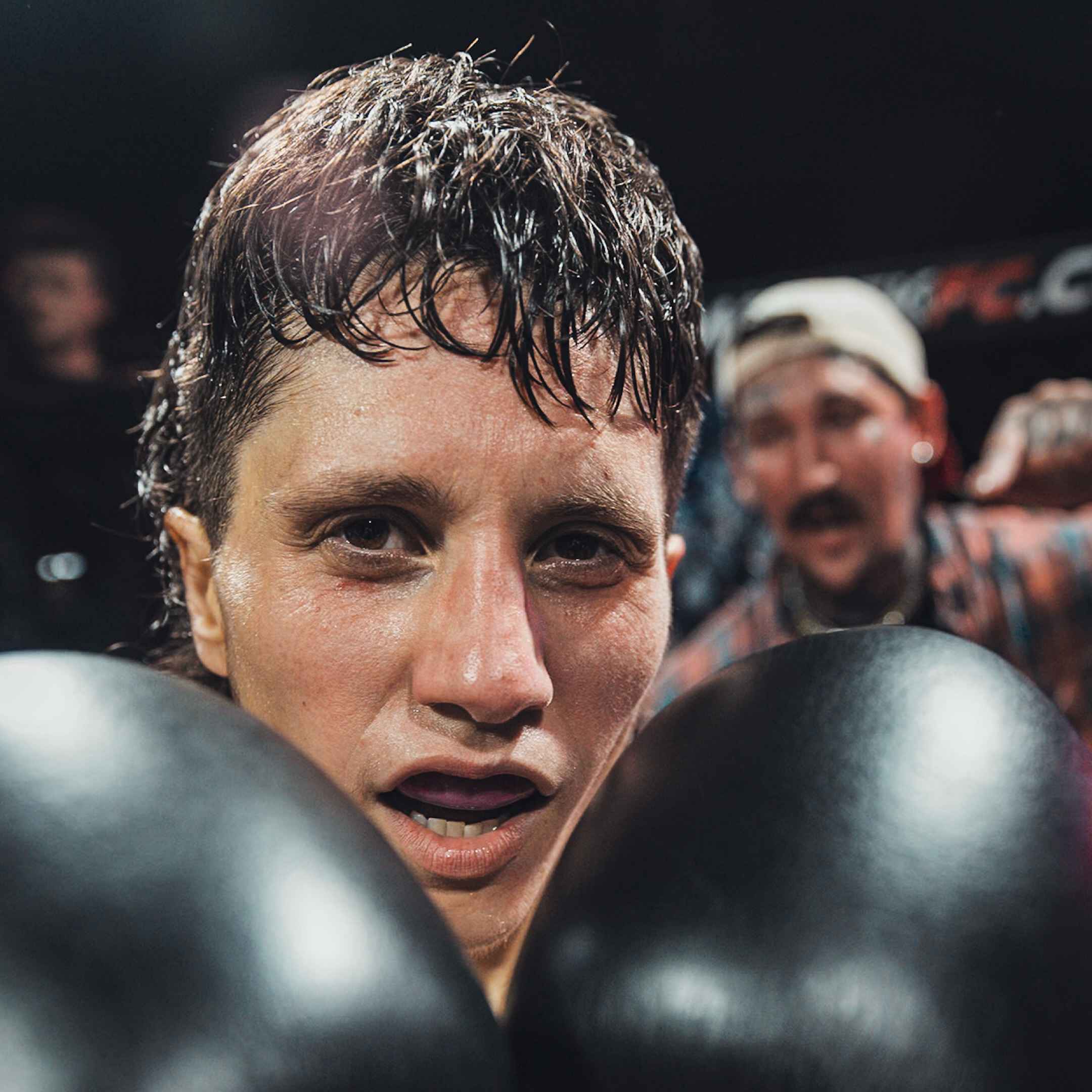
KC Mackey is a DJ, community builder and amateur fighter. She competes with the aim of raising the level of excellence in her own life and in the lives of others.
Watch the full interview
Questions from the interview
How old was KC Mackey when she earned her Taekwondo black belt?
KC Mackey said she earned her Taekwondo black belt at 16, after returning to classes she had quit following a difficult test.
What song did KC Mackey use for her first fight walkout?
KC Mackey said she walked out to “Jadu” by St. Louis artist umami for her first fight.
Has KC Mackey named the artist for her next fight walkout?
KC Mackey said she plans to use a track by a local rapper for her second walkout, but she did not name the artist or song.
Who are KC Mackey’s four house DJ selections?
KC Mackey chose Frankie Knuckles, Paul Johnson, Stacey Hotwax Hale and Moody man when asked to name her four house DJs.
When did KC Mackey encounter the Uhuru Movement?
KC Mackey said she was introduced to the Uhuru Movement about 10 years before her conversation with Brandon Coleman.
Does KC Mackey have a date for her next fight?
KC Mackey discussed music she plans to use for future walkouts but did not give a date or name an opponent for her next fight.
In this interview

More from Coleman Concepts

News

News

News